Angelfish Blue Face (Pomacanthus Xanthometopon) - Adult Form
Blueface Angelfish (Pomacanthus xanthometopon) - Adult Form
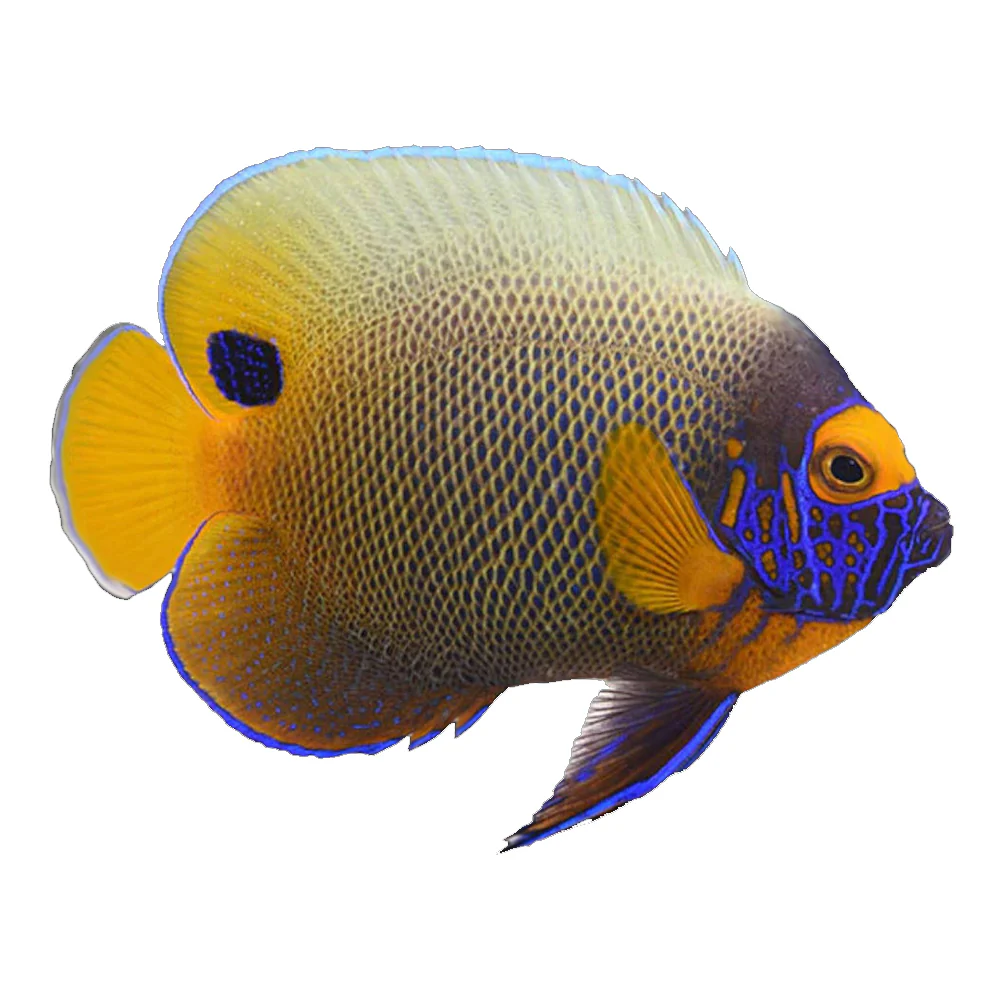
The Blueface Angelfish, also known as the Yellowface Angelfish, is widely considered one of the most spectacularly colored large angelfish in the world. While the juveniles display a standard "black with blue and white stripes" pattern, the adult transformation is breathtaking. The adult features a complex mesh-like pattern of blue and yellow on the body, a brilliant orange-to-yellow pectoral fin, and its namesake electric blue "mask" covering the face, accented by a bright yellow "eye-mask" or forehead.
Key Information
-
Common Name: Blueface Angelfish, Yellowface Angelfish
-
Scientific Name: Pomacanthus xanthometopon
-
Origin: Indo-Pacific (Maldives to Vanuatu, North to Japan)
-
Max Size: 35–38 cm
-
Lifespan: 15–20+ years
-
Temperament: Semi-aggressive; territorial once established
-
Diet: Omnivore – Requires specialized marine sponge-based foods, algae, and mysis shrimp
-
Care Level: Moderate to Difficult
Water Parameters
Temperature: 22–27°C pH: 8.1–8.4 Specific Gravity: 1.020–1.025 Minimum Tank Size: 830L+ (220 Gallons+)
Behaviour & Tank Compatibility
Adult Blueface Angelfish are bold and highly active swimmers that require vast amounts of space to thrive. They are notoriously territorial toward other large angelfish and may harass smaller, passive tank mates if the aquarium is cramped. They are not reef-safe; they naturally graze on sponges, tunicates, and various corals (both LPS and SPS). Ideal tank mates include large, robust species such as Tangs, Triggerfish, Groupers, and large Wrasses.
Ideal Tank Setup
-
A massive aquarium with a long swimming path is essential for preventing stress and aggression.
-
Plenty of live rock arranged with large caves and overhangs to provide secure sleeping areas.
-
Strong filtration and a high-performance protein skimmer are required to manage the bioload of a large, active feeder.
-
High-quality lighting is recommended to maintain the intensity of their complex color patterns.
-
Stable water chemistry is vital, as they are sensitive to copper and high nitrate levels.
Product Information
Product Information
Shipping & Returns
Shipping & Returns
Angelfish Blue Face (Pomacanthus Xanthometopon) - Adult Form
Angelfish Blue Face (Pomacanthus Xanthometopon) - Adult Form
Blueface Angelfish (Pomacanthus xanthometopon) - Adult Form
The Blueface Angelfish, also known as the Yellowface Angelfish, is widely considered one of the most spectacularly colored large angelfish in the world. While the juveniles display a standard "black with blue and white stripes" pattern, the adult transformation is breathtaking. The adult features a complex mesh-like pattern of blue and yellow on the body, a brilliant orange-to-yellow pectoral fin, and its namesake electric blue "mask" covering the face, accented by a bright yellow "eye-mask" or forehead.
Key Information
-
Common Name: Blueface Angelfish, Yellowface Angelfish
-
Scientific Name: Pomacanthus xanthometopon
-
Origin: Indo-Pacific (Maldives to Vanuatu, North to Japan)
-
Max Size: 35–38 cm
-
Lifespan: 15–20+ years
-
Temperament: Semi-aggressive; territorial once established
-
Diet: Omnivore – Requires specialized marine sponge-based foods, algae, and mysis shrimp
-
Care Level: Moderate to Difficult
Water Parameters
Temperature: 22–27°C pH: 8.1–8.4 Specific Gravity: 1.020–1.025 Minimum Tank Size: 830L+ (220 Gallons+)
Behaviour & Tank Compatibility
Adult Blueface Angelfish are bold and highly active swimmers that require vast amounts of space to thrive. They are notoriously territorial toward other large angelfish and may harass smaller, passive tank mates if the aquarium is cramped. They are not reef-safe; they naturally graze on sponges, tunicates, and various corals (both LPS and SPS). Ideal tank mates include large, robust species such as Tangs, Triggerfish, Groupers, and large Wrasses.
Ideal Tank Setup
-
A massive aquarium with a long swimming path is essential for preventing stress and aggression.
-
Plenty of live rock arranged with large caves and overhangs to provide secure sleeping areas.
-
Strong filtration and a high-performance protein skimmer are required to manage the bioload of a large, active feeder.
-
High-quality lighting is recommended to maintain the intensity of their complex color patterns.
-
Stable water chemistry is vital, as they are sensitive to copper and high nitrate levels.
Product Information
Product Information
Shipping & Returns
Shipping & Returns
Description
Blueface Angelfish (Pomacanthus xanthometopon) - Adult Form
The Blueface Angelfish, also known as the Yellowface Angelfish, is widely considered one of the most spectacularly colored large angelfish in the world. While the juveniles display a standard "black with blue and white stripes" pattern, the adult transformation is breathtaking. The adult features a complex mesh-like pattern of blue and yellow on the body, a brilliant orange-to-yellow pectoral fin, and its namesake electric blue "mask" covering the face, accented by a bright yellow "eye-mask" or forehead.
Key Information
-
Common Name: Blueface Angelfish, Yellowface Angelfish
-
Scientific Name: Pomacanthus xanthometopon
-
Origin: Indo-Pacific (Maldives to Vanuatu, North to Japan)
-
Max Size: 35–38 cm
-
Lifespan: 15–20+ years
-
Temperament: Semi-aggressive; territorial once established
-
Diet: Omnivore – Requires specialized marine sponge-based foods, algae, and mysis shrimp
-
Care Level: Moderate to Difficult
Water Parameters
Temperature: 22–27°C pH: 8.1–8.4 Specific Gravity: 1.020–1.025 Minimum Tank Size: 830L+ (220 Gallons+)
Behaviour & Tank Compatibility
Adult Blueface Angelfish are bold and highly active swimmers that require vast amounts of space to thrive. They are notoriously territorial toward other large angelfish and may harass smaller, passive tank mates if the aquarium is cramped. They are not reef-safe; they naturally graze on sponges, tunicates, and various corals (both LPS and SPS). Ideal tank mates include large, robust species such as Tangs, Triggerfish, Groupers, and large Wrasses.
Ideal Tank Setup
-
A massive aquarium with a long swimming path is essential for preventing stress and aggression.
-
Plenty of live rock arranged with large caves and overhangs to provide secure sleeping areas.
-
Strong filtration and a high-performance protein skimmer are required to manage the bioload of a large, active feeder.
-
High-quality lighting is recommended to maintain the intensity of their complex color patterns.
-
Stable water chemistry is vital, as they are sensitive to copper and high nitrate levels.