Angelfish Blue Face (Pomacanthus Xanthometopon) - Juvenile Form
Blueface Angelfish (Pomacanthus xanthometopon) - Juvenile Form
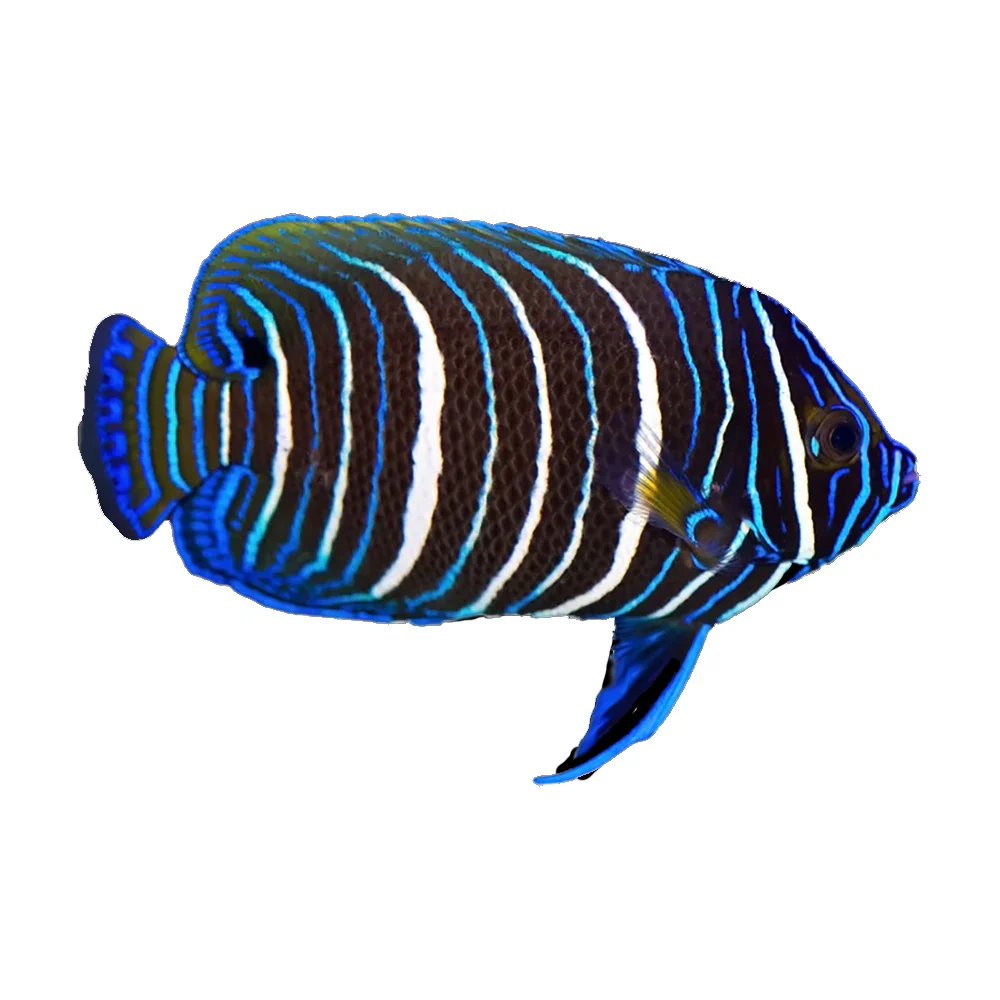
The juvenile Blueface Angelfish possesses a completely different aesthetic from its adult counterpart, utilizing a camouflage-based color pattern common among many large Pomacanthus species. In this stage, the fish features a deep black-to-navy body covered in a series of thin, concentric white and electric blue vertical stripes. As the fish grows, these stripes will eventually morph into the complex mesh and vibrant blue "mask" of the adult form.
Key Information
-
Common Name: Juvenile Blueface Angelfish, Juvenile Yellowface Angelfish
-
Scientific Name: Pomacanthus xanthometopon
-
Origin: Indo-Pacific (Maldives to Vanuatu, North to Japan)
-
Max Size: 35–38 cm (Adult size)
-
Lifespan: 15–20+ years
-
Temperament: Semi-aggressive; more reclusive than adults
-
Diet: Omnivore – mysis shrimp, vitamin-enriched brine shrimp, and high-quality pellets for marine angels
-
Care Level: Moderate
Water Parameters
Temperature: 22–27°C pH: 8.1–8.4 Specific Gravity: 1.020–1.025 Minimum Tank Size: 380L+ (Grow-out tank); 830L+ (Final adult tank)
Behaviour & Tank Compatibility
Juvenile Blueface Angelfish are much more shy and reclusive than adults. They tend to stay close to rockwork and may take time to become confident in open water. While they are generally peaceful toward non-angelfish tank mates, they should not be housed with other Pomacanthus juveniles as they will view them as territorial rivals. They are not reef-safe, as even juveniles will begin to nip at corals, polyps, and clam mantles as they explore their environment.
Ideal Tank Setup
-
Ample live rock with numerous small caves and crevices is vital for the juvenile's sense of security.
-
An established aquarium with natural microalgae growth to encourage foraging behavior.
-
Gentle-to-moderate water flow to allow the smaller juvenile to swim comfortably without exhaustion.
-
A stable environment with pristine water quality is crucial, as juveniles are more susceptible to stress and disease than hardy adults.
-
Gradual transition in lighting to prevent startling the fish as it acclimates from its deeper natural habitat.
Why Choose the Blueface Angelfish (Juvenile)?
Choosing a juvenile Blueface Angelfish allows the aquarist to witness one of nature's most dramatic transformations. Watching the vertical white stripes slowly fade and be replaced by the iconic blue mask and yellow forehead is a highlights of the marine hobby. While they require a large long-term commitment, starting with a juvenile often results in a fish that is better acclimated to aquarium life and more interactive with its owner as it matures.
Product Information
Product Information
Shipping & Returns
Shipping & Returns
Angelfish Blue Face (Pomacanthus Xanthometopon) - Juvenile Form
Angelfish Blue Face (Pomacanthus Xanthometopon) - Juvenile Form
Blueface Angelfish (Pomacanthus xanthometopon) - Juvenile Form
The juvenile Blueface Angelfish possesses a completely different aesthetic from its adult counterpart, utilizing a camouflage-based color pattern common among many large Pomacanthus species. In this stage, the fish features a deep black-to-navy body covered in a series of thin, concentric white and electric blue vertical stripes. As the fish grows, these stripes will eventually morph into the complex mesh and vibrant blue "mask" of the adult form.
Key Information
-
Common Name: Juvenile Blueface Angelfish, Juvenile Yellowface Angelfish
-
Scientific Name: Pomacanthus xanthometopon
-
Origin: Indo-Pacific (Maldives to Vanuatu, North to Japan)
-
Max Size: 35–38 cm (Adult size)
-
Lifespan: 15–20+ years
-
Temperament: Semi-aggressive; more reclusive than adults
-
Diet: Omnivore – mysis shrimp, vitamin-enriched brine shrimp, and high-quality pellets for marine angels
-
Care Level: Moderate
Water Parameters
Temperature: 22–27°C pH: 8.1–8.4 Specific Gravity: 1.020–1.025 Minimum Tank Size: 380L+ (Grow-out tank); 830L+ (Final adult tank)
Behaviour & Tank Compatibility
Juvenile Blueface Angelfish are much more shy and reclusive than adults. They tend to stay close to rockwork and may take time to become confident in open water. While they are generally peaceful toward non-angelfish tank mates, they should not be housed with other Pomacanthus juveniles as they will view them as territorial rivals. They are not reef-safe, as even juveniles will begin to nip at corals, polyps, and clam mantles as they explore their environment.
Ideal Tank Setup
-
Ample live rock with numerous small caves and crevices is vital for the juvenile's sense of security.
-
An established aquarium with natural microalgae growth to encourage foraging behavior.
-
Gentle-to-moderate water flow to allow the smaller juvenile to swim comfortably without exhaustion.
-
A stable environment with pristine water quality is crucial, as juveniles are more susceptible to stress and disease than hardy adults.
-
Gradual transition in lighting to prevent startling the fish as it acclimates from its deeper natural habitat.
Why Choose the Blueface Angelfish (Juvenile)?
Choosing a juvenile Blueface Angelfish allows the aquarist to witness one of nature's most dramatic transformations. Watching the vertical white stripes slowly fade and be replaced by the iconic blue mask and yellow forehead is a highlights of the marine hobby. While they require a large long-term commitment, starting with a juvenile often results in a fish that is better acclimated to aquarium life and more interactive with its owner as it matures.
Product Information
Product Information
Shipping & Returns
Shipping & Returns
Description
Blueface Angelfish (Pomacanthus xanthometopon) - Juvenile Form
The juvenile Blueface Angelfish possesses a completely different aesthetic from its adult counterpart, utilizing a camouflage-based color pattern common among many large Pomacanthus species. In this stage, the fish features a deep black-to-navy body covered in a series of thin, concentric white and electric blue vertical stripes. As the fish grows, these stripes will eventually morph into the complex mesh and vibrant blue "mask" of the adult form.
Key Information
-
Common Name: Juvenile Blueface Angelfish, Juvenile Yellowface Angelfish
-
Scientific Name: Pomacanthus xanthometopon
-
Origin: Indo-Pacific (Maldives to Vanuatu, North to Japan)
-
Max Size: 35–38 cm (Adult size)
-
Lifespan: 15–20+ years
-
Temperament: Semi-aggressive; more reclusive than adults
-
Diet: Omnivore – mysis shrimp, vitamin-enriched brine shrimp, and high-quality pellets for marine angels
-
Care Level: Moderate
Water Parameters
Temperature: 22–27°C pH: 8.1–8.4 Specific Gravity: 1.020–1.025 Minimum Tank Size: 380L+ (Grow-out tank); 830L+ (Final adult tank)
Behaviour & Tank Compatibility
Juvenile Blueface Angelfish are much more shy and reclusive than adults. They tend to stay close to rockwork and may take time to become confident in open water. While they are generally peaceful toward non-angelfish tank mates, they should not be housed with other Pomacanthus juveniles as they will view them as territorial rivals. They are not reef-safe, as even juveniles will begin to nip at corals, polyps, and clam mantles as they explore their environment.
Ideal Tank Setup
-
Ample live rock with numerous small caves and crevices is vital for the juvenile's sense of security.
-
An established aquarium with natural microalgae growth to encourage foraging behavior.
-
Gentle-to-moderate water flow to allow the smaller juvenile to swim comfortably without exhaustion.
-
A stable environment with pristine water quality is crucial, as juveniles are more susceptible to stress and disease than hardy adults.
-
Gradual transition in lighting to prevent startling the fish as it acclimates from its deeper natural habitat.
Why Choose the Blueface Angelfish (Juvenile)?
Choosing a juvenile Blueface Angelfish allows the aquarist to witness one of nature's most dramatic transformations. Watching the vertical white stripes slowly fade and be replaced by the iconic blue mask and yellow forehead is a highlights of the marine hobby. While they require a large long-term commitment, starting with a juvenile often results in a fish that is better acclimated to aquarium life and more interactive with its owner as it matures.