Apistogramma Cacatuoides Double Red
Double Red Cockatoo Apisto (Apistogramma cacatuoides "Double Red")
The "Double Red" Cockatoo Cichlid is a stunningly vibrant color morph of the Apistogramma cacatuoides. It is named for the intense red and black "flame" patterns found on both the dorsal and caudal (tail) fins. Known for its distinctive, high-standing dorsal fin that resembles a cockatoo’s crest, this fish is a favorite for aquarists who want big personality and "show-fish" aesthetics in a small, manageable package.
Key Information
-
Common Name: Double Red Cockatoo Cichlid, Double Red Apisto
-
Scientific Name: Apistogramma cacatuoides "Double Red"
-
Origin: South America (Amazon River Basin)
-
Max Size: Males 8 cm | Females 5 cm
-
Lifespan: 3–5 years
-
Temperament: Semi-peaceful (Territorial bottom-dweller)
-
Diet: Omnivore/Invertivore – Prefers high-quality granules and frozen foods like artemia or bloodworms.
-
Care Level: Easy to Moderate
Water Parameters
| Parameter | Value |
| Temperature: | 24–28°C |
| pH: | 6.0–7.8 (Highly adaptable compared to other Apistos) |
| Hardness: | 5–15 dGH |
| Minimum Tank Size: | 60L+ |
Behaviour & Tank Compatibility
The Cockatoo Cichlid is generally peaceful toward mid-water and surface-dwelling fish. Males can be territorial toward other bottom-dwellers, especially other males of the same species. They are best kept in pairs or harems (one male to several females). Ideal tank mates include Tetras, Pencilfish, Hatchetfish, and peaceful Corydoras. During breeding, the female becomes a devoted and protective mother, often turning a bright yellow color.
Ideal Tank Setup
-
Cave Variety: They are cave spawners; provide multiple small caves, flower pots, or coconut shells.
-
Planted Environments: They feel most secure in tanks with dense plants and shaded areas.
-
Sandy Substrate: Fine sand is preferred as they like to sift the substrate for food particles.
-
Driftwood & Botanicals: Adding driftwood and Indian Almond Leaves (Catappa) helps mimic their natural environment and provides natural tannins.
Product Information
Product Information
Shipping & Returns
Shipping & Returns
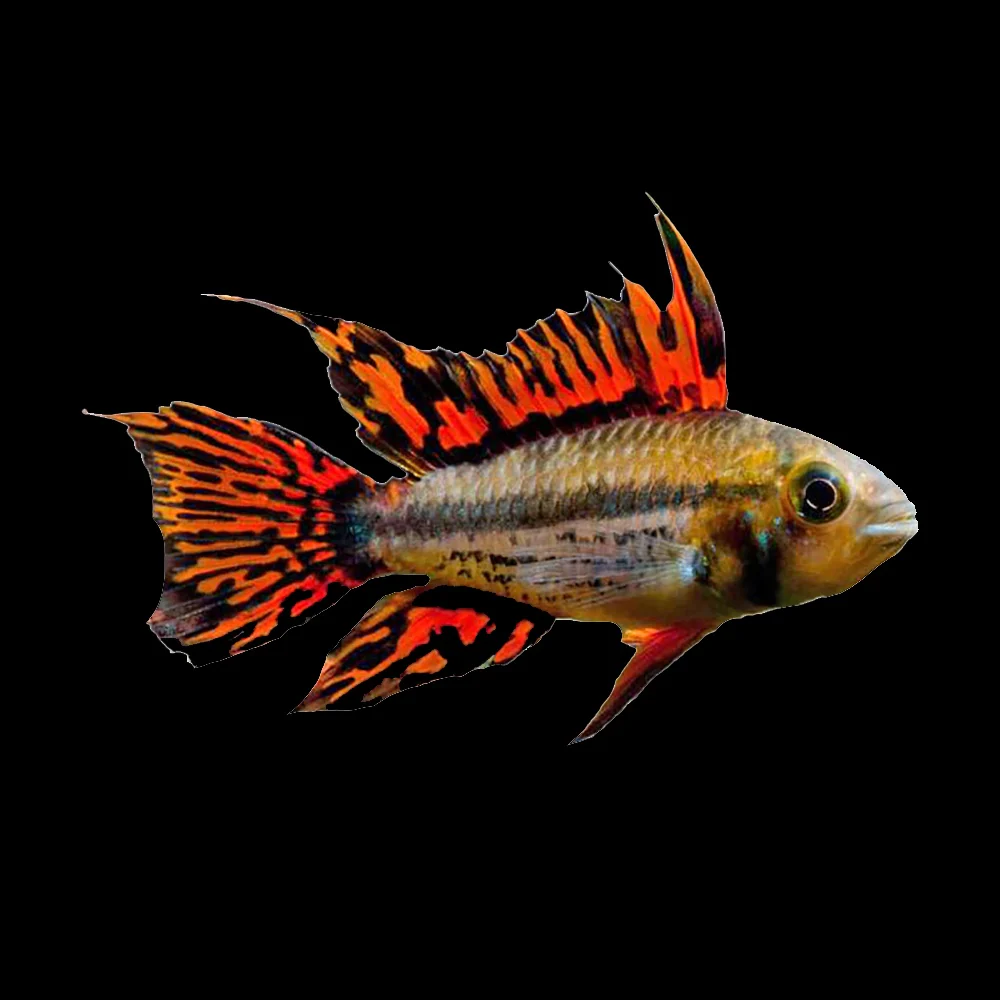
Apistogramma Cacatuoides Double Red
Apistogramma Cacatuoides Double Red
Double Red Cockatoo Apisto (Apistogramma cacatuoides "Double Red")
The "Double Red" Cockatoo Cichlid is a stunningly vibrant color morph of the Apistogramma cacatuoides. It is named for the intense red and black "flame" patterns found on both the dorsal and caudal (tail) fins. Known for its distinctive, high-standing dorsal fin that resembles a cockatoo’s crest, this fish is a favorite for aquarists who want big personality and "show-fish" aesthetics in a small, manageable package.
Key Information
-
Common Name: Double Red Cockatoo Cichlid, Double Red Apisto
-
Scientific Name: Apistogramma cacatuoides "Double Red"
-
Origin: South America (Amazon River Basin)
-
Max Size: Males 8 cm | Females 5 cm
-
Lifespan: 3–5 years
-
Temperament: Semi-peaceful (Territorial bottom-dweller)
-
Diet: Omnivore/Invertivore – Prefers high-quality granules and frozen foods like artemia or bloodworms.
-
Care Level: Easy to Moderate
Water Parameters
| Parameter | Value |
| Temperature: | 24–28°C |
| pH: | 6.0–7.8 (Highly adaptable compared to other Apistos) |
| Hardness: | 5–15 dGH |
| Minimum Tank Size: | 60L+ |
Behaviour & Tank Compatibility
The Cockatoo Cichlid is generally peaceful toward mid-water and surface-dwelling fish. Males can be territorial toward other bottom-dwellers, especially other males of the same species. They are best kept in pairs or harems (one male to several females). Ideal tank mates include Tetras, Pencilfish, Hatchetfish, and peaceful Corydoras. During breeding, the female becomes a devoted and protective mother, often turning a bright yellow color.
Ideal Tank Setup
-
Cave Variety: They are cave spawners; provide multiple small caves, flower pots, or coconut shells.
-
Planted Environments: They feel most secure in tanks with dense plants and shaded areas.
-
Sandy Substrate: Fine sand is preferred as they like to sift the substrate for food particles.
-
Driftwood & Botanicals: Adding driftwood and Indian Almond Leaves (Catappa) helps mimic their natural environment and provides natural tannins.
Original: $32.18
-65%$32.18
$11.26Product Information
Product Information
Shipping & Returns
Shipping & Returns
Description
Double Red Cockatoo Apisto (Apistogramma cacatuoides "Double Red")
The "Double Red" Cockatoo Cichlid is a stunningly vibrant color morph of the Apistogramma cacatuoides. It is named for the intense red and black "flame" patterns found on both the dorsal and caudal (tail) fins. Known for its distinctive, high-standing dorsal fin that resembles a cockatoo’s crest, this fish is a favorite for aquarists who want big personality and "show-fish" aesthetics in a small, manageable package.
Key Information
-
Common Name: Double Red Cockatoo Cichlid, Double Red Apisto
-
Scientific Name: Apistogramma cacatuoides "Double Red"
-
Origin: South America (Amazon River Basin)
-
Max Size: Males 8 cm | Females 5 cm
-
Lifespan: 3–5 years
-
Temperament: Semi-peaceful (Territorial bottom-dweller)
-
Diet: Omnivore/Invertivore – Prefers high-quality granules and frozen foods like artemia or bloodworms.
-
Care Level: Easy to Moderate
Water Parameters
| Parameter | Value |
| Temperature: | 24–28°C |
| pH: | 6.0–7.8 (Highly adaptable compared to other Apistos) |
| Hardness: | 5–15 dGH |
| Minimum Tank Size: | 60L+ |
Behaviour & Tank Compatibility
The Cockatoo Cichlid is generally peaceful toward mid-water and surface-dwelling fish. Males can be territorial toward other bottom-dwellers, especially other males of the same species. They are best kept in pairs or harems (one male to several females). Ideal tank mates include Tetras, Pencilfish, Hatchetfish, and peaceful Corydoras. During breeding, the female becomes a devoted and protective mother, often turning a bright yellow color.
Ideal Tank Setup
-
Cave Variety: They are cave spawners; provide multiple small caves, flower pots, or coconut shells.
-
Planted Environments: They feel most secure in tanks with dense plants and shaded areas.
-
Sandy Substrate: Fine sand is preferred as they like to sift the substrate for food particles.
-
Driftwood & Botanicals: Adding driftwood and Indian Almond Leaves (Catappa) helps mimic their natural environment and provides natural tannins.