Blue Sapphire Damselfish (Chrysiptera cf. springeri)
Blue Sapphire Damselfish (Chrysiptera cf. springeri)
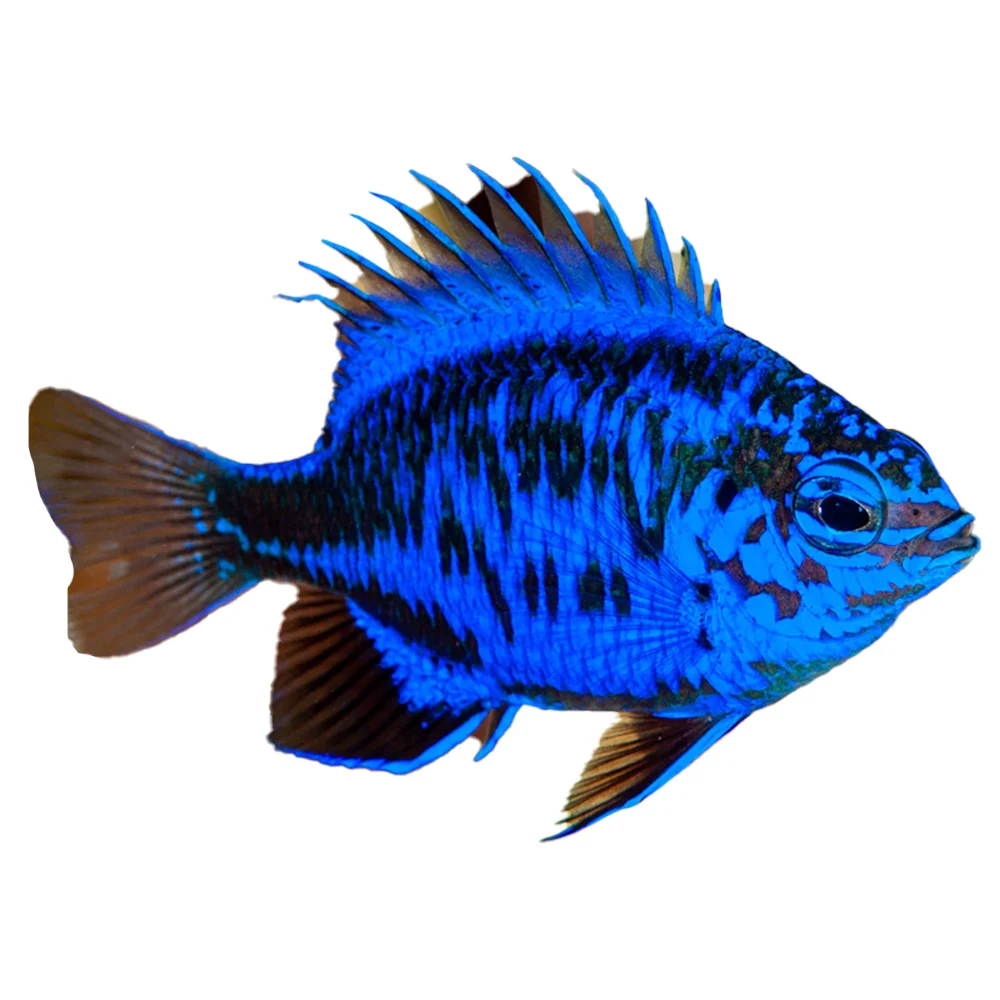
The Blue Sapphire Damselfish (often identified as Chrysiptera cf. springeri) is a standout for those who want the intense color of a damselfish without the "devilish" behavior. While closely related to the standard Springer’s Damselfish, this variant is prized for its shimmering, deep sapphire-blue body and its famous ability to help control flatworms in reef systems.
Key Information
-
Common Names: Blue Sapphire Damselfish, Springeri Damsel, Blue Springer’s Dottyback
-
Scientific Name: Chrysiptera cf. springeri
-
Origin: Indonesia and the Solomon Islands
-
Max Size: 5–6 cm (approx. 2–2.5 inches)
-
Lifespan: 5–6 years
-
Temperament: Peaceful to Semi-aggressive; one of the best-behaved damselfishes
-
Diet: Omnivore – Voracious eater of flatworms; also accepts mysis, brine, and pellets
-
Care Level: Easy
Appearance & Identification
The Blue Sapphire is often confused with other blue damsels, but it has specific markings:
-
Deep Blue Body: A solid, rich blue that can appear almost black in low light or when the fish is stressed.
-
Black Markings: Features fine black scribbles or outlines on the face and fins, which distinguish it from the solid-blue Chrysiptera cyanea.
-
Stress Response: Unlike most fish that turn pale, this species can turn completely black when stressed or trying to hide from predators.
Behaviour & Tank Compatibility
The Blue Sapphire is a "utility fish" with a better-than-average attitude:
-
The Flatworm Hunter: Many hobbyists add this fish specifically because it is known to hunt and eat flatworms that can plague corals, making it a functional addition to a reef.
-
Aggression: While still a damselfish, it is significantly less aggressive than the Blue Devil or Azure Damsels. It generally minds its own business unless another fish enters its immediate "home" crevice.
-
Reef Safe: 100% Reef Safe. They are ideal for coral tanks and are often used in small groups (harem style) in larger systems.
-
Tank Mates: Compatible with Clownfish, Blennies, and Wrasses. Avoid housing with overly aggressive damselfish that might bully it, or large predators that could eat it.
Ideal Tank Setup
-
Tank Size: A minimum of 75L (20 Gallons) is sufficient for a single specimen, making it a great choice for nano reefs.
-
Rockwork: Provide plenty of live rock with small holes. They love to "park" themselves in a specific crevice and will spend most of their time hovering near their chosen territory.
-
Substrate: They are frequently found over sand and rubble zones, so a sandy bottom with some coral rubble is ideal.
-
Lid: Like all small, active swimmers, they can jump if startled. A secure lid is highly recommended.
Why Choose the Blue Sapphire Damselfish?
The Blue Sapphire is for the hobbyist who wants functional beauty. It offers a stunning "glow" under reef lights while providing the added benefit of pest control. Because it stays small and maintains a relatively peaceful demeanor, it is one of the few damselfish that "plays well with others" in a long-term community or reef setting.
Product Information
Product Information
Shipping & Returns
Shipping & Returns
Blue Sapphire Damselfish (Chrysiptera cf. springeri)
Blue Sapphire Damselfish (Chrysiptera cf. springeri)
Blue Sapphire Damselfish (Chrysiptera cf. springeri)
The Blue Sapphire Damselfish (often identified as Chrysiptera cf. springeri) is a standout for those who want the intense color of a damselfish without the "devilish" behavior. While closely related to the standard Springer’s Damselfish, this variant is prized for its shimmering, deep sapphire-blue body and its famous ability to help control flatworms in reef systems.
Key Information
-
Common Names: Blue Sapphire Damselfish, Springeri Damsel, Blue Springer’s Dottyback
-
Scientific Name: Chrysiptera cf. springeri
-
Origin: Indonesia and the Solomon Islands
-
Max Size: 5–6 cm (approx. 2–2.5 inches)
-
Lifespan: 5–6 years
-
Temperament: Peaceful to Semi-aggressive; one of the best-behaved damselfishes
-
Diet: Omnivore – Voracious eater of flatworms; also accepts mysis, brine, and pellets
-
Care Level: Easy
Appearance & Identification
The Blue Sapphire is often confused with other blue damsels, but it has specific markings:
-
Deep Blue Body: A solid, rich blue that can appear almost black in low light or when the fish is stressed.
-
Black Markings: Features fine black scribbles or outlines on the face and fins, which distinguish it from the solid-blue Chrysiptera cyanea.
-
Stress Response: Unlike most fish that turn pale, this species can turn completely black when stressed or trying to hide from predators.
Behaviour & Tank Compatibility
The Blue Sapphire is a "utility fish" with a better-than-average attitude:
-
The Flatworm Hunter: Many hobbyists add this fish specifically because it is known to hunt and eat flatworms that can plague corals, making it a functional addition to a reef.
-
Aggression: While still a damselfish, it is significantly less aggressive than the Blue Devil or Azure Damsels. It generally minds its own business unless another fish enters its immediate "home" crevice.
-
Reef Safe: 100% Reef Safe. They are ideal for coral tanks and are often used in small groups (harem style) in larger systems.
-
Tank Mates: Compatible with Clownfish, Blennies, and Wrasses. Avoid housing with overly aggressive damselfish that might bully it, or large predators that could eat it.
Ideal Tank Setup
-
Tank Size: A minimum of 75L (20 Gallons) is sufficient for a single specimen, making it a great choice for nano reefs.
-
Rockwork: Provide plenty of live rock with small holes. They love to "park" themselves in a specific crevice and will spend most of their time hovering near their chosen territory.
-
Substrate: They are frequently found over sand and rubble zones, so a sandy bottom with some coral rubble is ideal.
-
Lid: Like all small, active swimmers, they can jump if startled. A secure lid is highly recommended.
Why Choose the Blue Sapphire Damselfish?
The Blue Sapphire is for the hobbyist who wants functional beauty. It offers a stunning "glow" under reef lights while providing the added benefit of pest control. Because it stays small and maintains a relatively peaceful demeanor, it is one of the few damselfish that "plays well with others" in a long-term community or reef setting.
Product Information
Product Information
Shipping & Returns
Shipping & Returns
Description
Blue Sapphire Damselfish (Chrysiptera cf. springeri)
The Blue Sapphire Damselfish (often identified as Chrysiptera cf. springeri) is a standout for those who want the intense color of a damselfish without the "devilish" behavior. While closely related to the standard Springer’s Damselfish, this variant is prized for its shimmering, deep sapphire-blue body and its famous ability to help control flatworms in reef systems.
Key Information
-
Common Names: Blue Sapphire Damselfish, Springeri Damsel, Blue Springer’s Dottyback
-
Scientific Name: Chrysiptera cf. springeri
-
Origin: Indonesia and the Solomon Islands
-
Max Size: 5–6 cm (approx. 2–2.5 inches)
-
Lifespan: 5–6 years
-
Temperament: Peaceful to Semi-aggressive; one of the best-behaved damselfishes
-
Diet: Omnivore – Voracious eater of flatworms; also accepts mysis, brine, and pellets
-
Care Level: Easy
Appearance & Identification
The Blue Sapphire is often confused with other blue damsels, but it has specific markings:
-
Deep Blue Body: A solid, rich blue that can appear almost black in low light or when the fish is stressed.
-
Black Markings: Features fine black scribbles or outlines on the face and fins, which distinguish it from the solid-blue Chrysiptera cyanea.
-
Stress Response: Unlike most fish that turn pale, this species can turn completely black when stressed or trying to hide from predators.
Behaviour & Tank Compatibility
The Blue Sapphire is a "utility fish" with a better-than-average attitude:
-
The Flatworm Hunter: Many hobbyists add this fish specifically because it is known to hunt and eat flatworms that can plague corals, making it a functional addition to a reef.
-
Aggression: While still a damselfish, it is significantly less aggressive than the Blue Devil or Azure Damsels. It generally minds its own business unless another fish enters its immediate "home" crevice.
-
Reef Safe: 100% Reef Safe. They are ideal for coral tanks and are often used in small groups (harem style) in larger systems.
-
Tank Mates: Compatible with Clownfish, Blennies, and Wrasses. Avoid housing with overly aggressive damselfish that might bully it, or large predators that could eat it.
Ideal Tank Setup
-
Tank Size: A minimum of 75L (20 Gallons) is sufficient for a single specimen, making it a great choice for nano reefs.
-
Rockwork: Provide plenty of live rock with small holes. They love to "park" themselves in a specific crevice and will spend most of their time hovering near their chosen territory.
-
Substrate: They are frequently found over sand and rubble zones, so a sandy bottom with some coral rubble is ideal.
-
Lid: Like all small, active swimmers, they can jump if startled. A secure lid is highly recommended.
Why Choose the Blue Sapphire Damselfish?
The Blue Sapphire is for the hobbyist who wants functional beauty. It offers a stunning "glow" under reef lights while providing the added benefit of pest control. Because it stays small and maintains a relatively peaceful demeanor, it is one of the few damselfish that "plays well with others" in a long-term community or reef setting.