Lime Wrasse (Halichoeres Chloropterus)
Lime Wrasse (Halichoeres chloropterus)
The Lime Wrasse, also known as the Pastel-Green Wrasse or Green-Spot Wrasse, is a vibrant and hardworking member of the Halichoeres genus. In Indonesia and the Western Pacific, it is a staple of the reef aquarium hobby, prized not just for its refreshing neon-green color but for its role as a "biological pest controller." It is one of the most effective hunters of coral-eating pests, making it a functional hero in many reef displays.
Key Information
-
Common Names: Lime Wrasse, Pastel-Green Wrasse, Green-Spot Wrasse
-
Scientific Name: Halichoeres chloropterus
-
Origin: Western Pacific (Indonesia, Philippines, Great Barrier Reef)
-
Max Size: 18–19 cm (approx. 7 inches)
-
Lifespan: 5–10 years
-
Temperament: Semi-aggressive; bold and active
-
Diet: Carnivore – Specialist hunter of invertebrates
-
Care Level: Easy
Appearance & Identification
The Lime Wrasse undergoes a significant color shift as it matures:
-
The Juvenile: Often a solid, brilliant pastel green or lime color with very few markings.
-
The Terminal Male: Develops a more complex "marbled" look. The body remains lime green but is covered in a network of fine pink-to-purple wavy lines and spots on the face.
-
The "Spot": Some individuals (especially females/juveniles) may have a dark spot on the middle of the body or near the dorsal fin, though this often fades in mature males.
Behaviour & Tank Compatibility
-
The Pest Hunter: This fish is a "search and destroy" specialist. It is famous for eating Flatworms, Pyramidellid snails (which attack clams), and Bristle worms. It is often added to reefs specifically to manage these outbreaks.
-
The "Sand Sleeper": Like all Halichoeres wrasses, it dives into the sand to sleep at night or when it feels threatened.
-
Reef Safe (with Caution): While they are 100% safe with corals, they are not safe with small invertebrates. As they grow, they will eat ornamental shrimp (like Sexy or Peppermint shrimp), small snails, and crabs.
-
Aggression: They are generally peaceful toward fish, but can be boisterous. They may bully smaller, more timid wrasses or new additions if the tank is too small.
Ideal Tank Setup
-
Substrate is Mandatory: You must have a fine sand bed at least 2–3 inches deep. They cannot survive in bare-bottom tanks or those with coarse crushed coral, as they will injure themselves trying to bury.
-
Tank Size: A minimum of 200L–285L (55–75 Gallons) is required to provide enough room for their active swimming and hunting behavior.
-
Lid is Mandatory: Wrasses are "escape artists." If they are startled, their first instinct is to bolt upward. A secure lid or mesh screen is essential.
-
Rockwork: Provide plenty of live rock. They spend their entire day "inspecting" every crack and crevice for tiny morsels of food.
Dietary Needs
Even though they are great hunters, they need supplemental feeding:
-
Feeding Frequency: Feed 2 times daily.
-
Preferred Foods: Frozen mysis shrimp, enriched brine shrimp, and chopped seafood. They have high metabolisms and are very eager eaters.
-
Natural Foraging: They will continuously hunt for copepods and small crustaceans in your rockwork throughout the day.
Why Choose the Lime Wrasse?
The Lime Wrasse is for the hobbyist who wants a beautiful fish with a purpose. If you have a reef tank and want to protect your corals from flatworms or keep your bristle worm population in check, this is the fish for the job. Its bright, neon-green color provides a "pop" that is rare in the marine world, especially against the typical blues and reds of a reef.
Product Information
Product Information
Shipping & Returns
Shipping & Returns
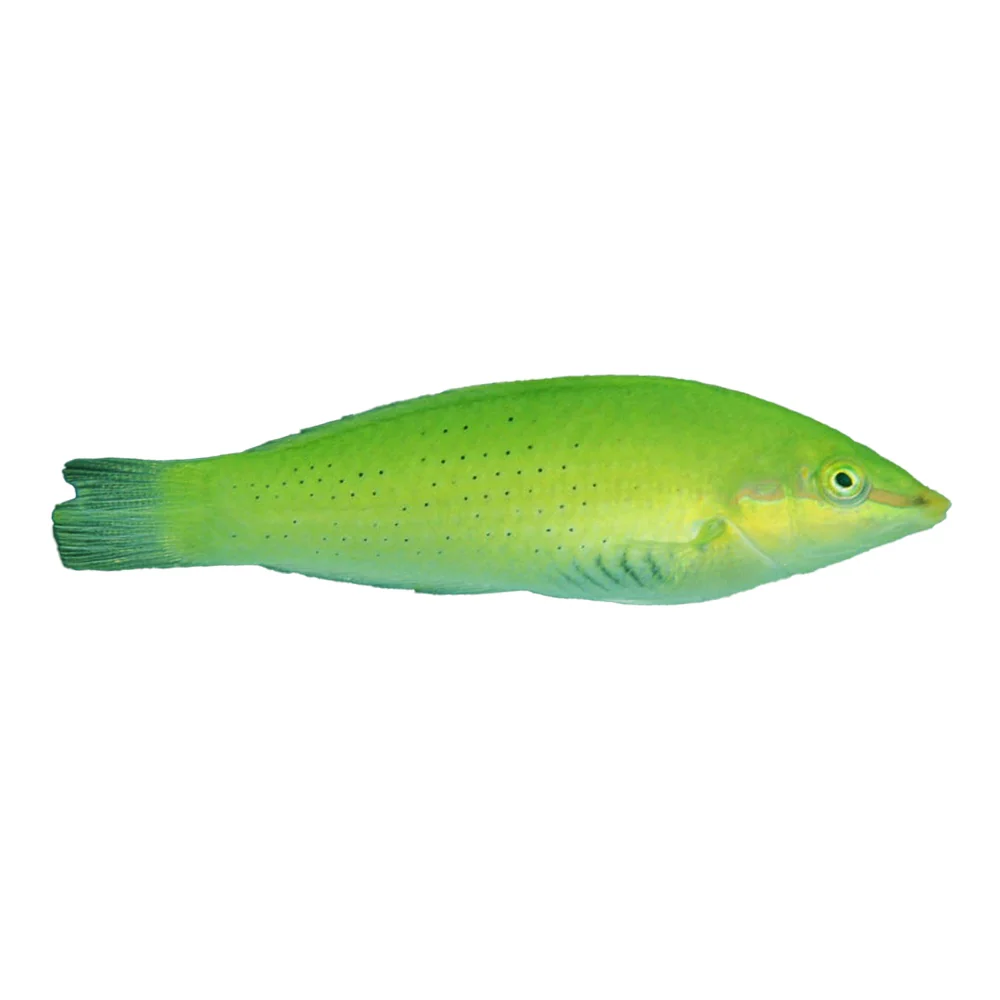
Lime Wrasse (Halichoeres Chloropterus)
Lime Wrasse (Halichoeres Chloropterus)
Lime Wrasse (Halichoeres chloropterus)
The Lime Wrasse, also known as the Pastel-Green Wrasse or Green-Spot Wrasse, is a vibrant and hardworking member of the Halichoeres genus. In Indonesia and the Western Pacific, it is a staple of the reef aquarium hobby, prized not just for its refreshing neon-green color but for its role as a "biological pest controller." It is one of the most effective hunters of coral-eating pests, making it a functional hero in many reef displays.
Key Information
-
Common Names: Lime Wrasse, Pastel-Green Wrasse, Green-Spot Wrasse
-
Scientific Name: Halichoeres chloropterus
-
Origin: Western Pacific (Indonesia, Philippines, Great Barrier Reef)
-
Max Size: 18–19 cm (approx. 7 inches)
-
Lifespan: 5–10 years
-
Temperament: Semi-aggressive; bold and active
-
Diet: Carnivore – Specialist hunter of invertebrates
-
Care Level: Easy
Appearance & Identification
The Lime Wrasse undergoes a significant color shift as it matures:
-
The Juvenile: Often a solid, brilliant pastel green or lime color with very few markings.
-
The Terminal Male: Develops a more complex "marbled" look. The body remains lime green but is covered in a network of fine pink-to-purple wavy lines and spots on the face.
-
The "Spot": Some individuals (especially females/juveniles) may have a dark spot on the middle of the body or near the dorsal fin, though this often fades in mature males.
Behaviour & Tank Compatibility
-
The Pest Hunter: This fish is a "search and destroy" specialist. It is famous for eating Flatworms, Pyramidellid snails (which attack clams), and Bristle worms. It is often added to reefs specifically to manage these outbreaks.
-
The "Sand Sleeper": Like all Halichoeres wrasses, it dives into the sand to sleep at night or when it feels threatened.
-
Reef Safe (with Caution): While they are 100% safe with corals, they are not safe with small invertebrates. As they grow, they will eat ornamental shrimp (like Sexy or Peppermint shrimp), small snails, and crabs.
-
Aggression: They are generally peaceful toward fish, but can be boisterous. They may bully smaller, more timid wrasses or new additions if the tank is too small.
Ideal Tank Setup
-
Substrate is Mandatory: You must have a fine sand bed at least 2–3 inches deep. They cannot survive in bare-bottom tanks or those with coarse crushed coral, as they will injure themselves trying to bury.
-
Tank Size: A minimum of 200L–285L (55–75 Gallons) is required to provide enough room for their active swimming and hunting behavior.
-
Lid is Mandatory: Wrasses are "escape artists." If they are startled, their first instinct is to bolt upward. A secure lid or mesh screen is essential.
-
Rockwork: Provide plenty of live rock. They spend their entire day "inspecting" every crack and crevice for tiny morsels of food.
Dietary Needs
Even though they are great hunters, they need supplemental feeding:
-
Feeding Frequency: Feed 2 times daily.
-
Preferred Foods: Frozen mysis shrimp, enriched brine shrimp, and chopped seafood. They have high metabolisms and are very eager eaters.
-
Natural Foraging: They will continuously hunt for copepods and small crustaceans in your rockwork throughout the day.
Why Choose the Lime Wrasse?
The Lime Wrasse is for the hobbyist who wants a beautiful fish with a purpose. If you have a reef tank and want to protect your corals from flatworms or keep your bristle worm population in check, this is the fish for the job. Its bright, neon-green color provides a "pop" that is rare in the marine world, especially against the typical blues and reds of a reef.
Original: $53.64
-65%$53.64
$18.77Product Information
Product Information
Shipping & Returns
Shipping & Returns
Description
Lime Wrasse (Halichoeres chloropterus)
The Lime Wrasse, also known as the Pastel-Green Wrasse or Green-Spot Wrasse, is a vibrant and hardworking member of the Halichoeres genus. In Indonesia and the Western Pacific, it is a staple of the reef aquarium hobby, prized not just for its refreshing neon-green color but for its role as a "biological pest controller." It is one of the most effective hunters of coral-eating pests, making it a functional hero in many reef displays.
Key Information
-
Common Names: Lime Wrasse, Pastel-Green Wrasse, Green-Spot Wrasse
-
Scientific Name: Halichoeres chloropterus
-
Origin: Western Pacific (Indonesia, Philippines, Great Barrier Reef)
-
Max Size: 18–19 cm (approx. 7 inches)
-
Lifespan: 5–10 years
-
Temperament: Semi-aggressive; bold and active
-
Diet: Carnivore – Specialist hunter of invertebrates
-
Care Level: Easy
Appearance & Identification
The Lime Wrasse undergoes a significant color shift as it matures:
-
The Juvenile: Often a solid, brilliant pastel green or lime color with very few markings.
-
The Terminal Male: Develops a more complex "marbled" look. The body remains lime green but is covered in a network of fine pink-to-purple wavy lines and spots on the face.
-
The "Spot": Some individuals (especially females/juveniles) may have a dark spot on the middle of the body or near the dorsal fin, though this often fades in mature males.
Behaviour & Tank Compatibility
-
The Pest Hunter: This fish is a "search and destroy" specialist. It is famous for eating Flatworms, Pyramidellid snails (which attack clams), and Bristle worms. It is often added to reefs specifically to manage these outbreaks.
-
The "Sand Sleeper": Like all Halichoeres wrasses, it dives into the sand to sleep at night or when it feels threatened.
-
Reef Safe (with Caution): While they are 100% safe with corals, they are not safe with small invertebrates. As they grow, they will eat ornamental shrimp (like Sexy or Peppermint shrimp), small snails, and crabs.
-
Aggression: They are generally peaceful toward fish, but can be boisterous. They may bully smaller, more timid wrasses or new additions if the tank is too small.
Ideal Tank Setup
-
Substrate is Mandatory: You must have a fine sand bed at least 2–3 inches deep. They cannot survive in bare-bottom tanks or those with coarse crushed coral, as they will injure themselves trying to bury.
-
Tank Size: A minimum of 200L–285L (55–75 Gallons) is required to provide enough room for their active swimming and hunting behavior.
-
Lid is Mandatory: Wrasses are "escape artists." If they are startled, their first instinct is to bolt upward. A secure lid or mesh screen is essential.
-
Rockwork: Provide plenty of live rock. They spend their entire day "inspecting" every crack and crevice for tiny morsels of food.
Dietary Needs
Even though they are great hunters, they need supplemental feeding:
-
Feeding Frequency: Feed 2 times daily.
-
Preferred Foods: Frozen mysis shrimp, enriched brine shrimp, and chopped seafood. They have high metabolisms and are very eager eaters.
-
Natural Foraging: They will continuously hunt for copepods and small crustaceans in your rockwork throughout the day.
Why Choose the Lime Wrasse?
The Lime Wrasse is for the hobbyist who wants a beautiful fish with a purpose. If you have a reef tank and want to protect your corals from flatworms or keep your bristle worm population in check, this is the fish for the job. Its bright, neon-green color provides a "pop" that is rare in the marine world, especially against the typical blues and reds of a reef.