Tang Bristletooth Lined (Ctenochaetus Striatus)
Lined Bristletooth Tang (Ctenochaetus striatus)
The Lined Bristletooth Tang, also known as the Striated Surgeonfish or Orange-lined Bristletooth, is a highly functional and underrated member of the Ctenochaetus genus. While it may not possess the vibrant "flash" of a Gem Tang or a Powder Blue, it is a powerhouse of utility. In Indonesia and across the Indo-Pacific, it is recognized as one of the most efficient "maintenance" fish, specialized in cleaning film algae and detritus from your rockwork and glass.
Key Information
-
Common Names: Lined Bristletooth Tang, Striated Surgeonfish, Orange-lined Bristletooth
-
Scientific Name: Ctenochaetus striatus
-
Origin: Widespread Indo-Pacific (Red Sea to French Polynesia, very common in Indonesia)
-
Max Size: 20–25 cm (approx. 8–10 inches)
-
Lifespan: 10–15+ years
-
Temperament: Semi-aggressive; generally peaceful but territorial toward similar species
-
Diet: Herbivore/Detritivore – Specialist in film algae and organic matter
-
Care Level: Moderate
Appearance & Identification
The beauty of the Lined Bristletooth is in its intricate, fine-scale detailing:
-
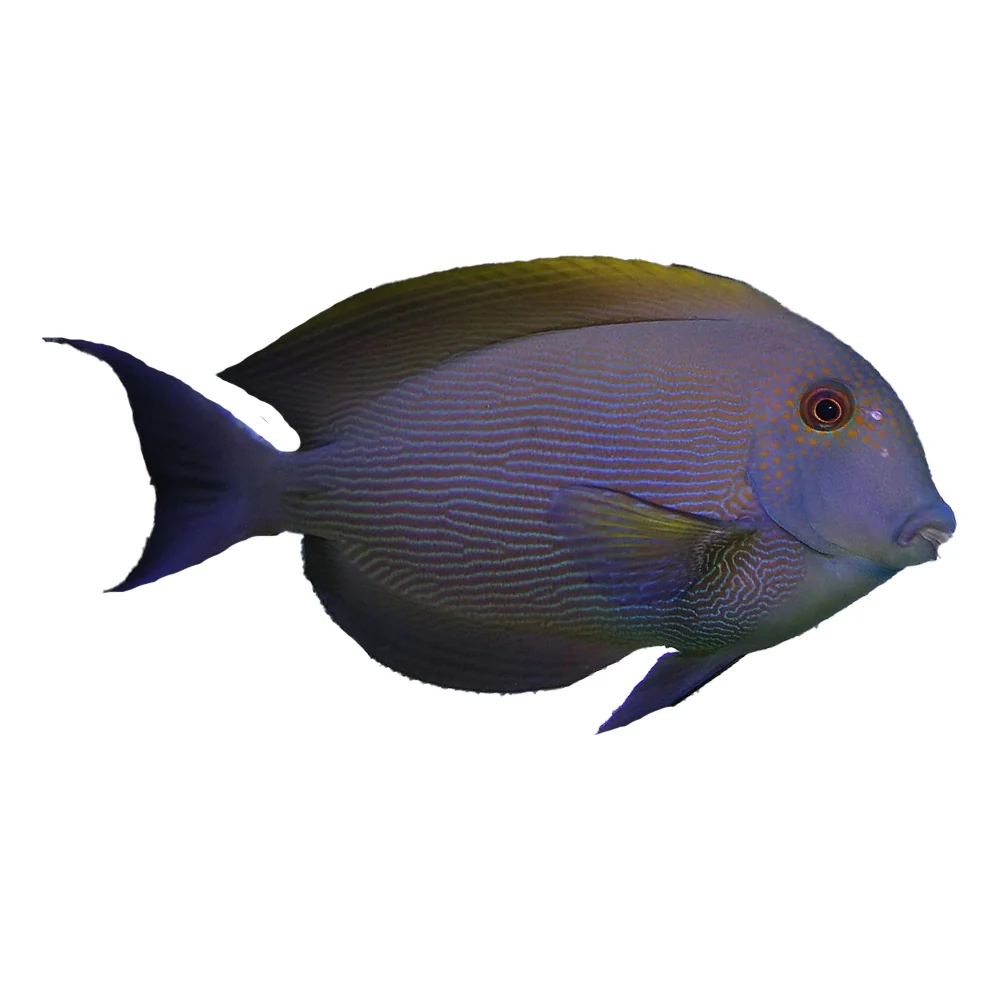
The Pattern: A deep olive-to-burgundy body covered in numerous fine, horizontal orange-to-gold lines.
-
The Head: The head and chest area are typically covered in small orange or yellowish spots rather than lines.
-
The Tail: Features a slightly lyre-shaped tail that can appear dark or occasionally show a hint of blue/white at the tips.
-
The Mouth: Like all Bristletooths, it has specialized, comb-like teeth and a vacuum-shaped mouth designed to "scrape" and "kiss" surfaces rather than bite.
Behaviour & Tank Compatibility
-
The Janitor: This fish is a "search and destroy" specialist for film algae and brown diatoms. You will often see "kiss marks" on your glass where it has scraped away the biofilm.
-
Detritus Control: Unlike many tangs that only eat algae, Ctenochaetus species also consume detritus (organic waste), making them excellent for preventing "dead zones" in the tank.
-
Aggression: It is generally peaceful toward non-tangs. However, it will be very territorial toward other members of the Ctenochaetus genus (like the Kole or Tomini Tang) or anything with a similar body shape.
-
Reef Safe: 100% Reef Safe. They are a major asset to coral health by keeping the "base" of the rocks clean for coral attachment.
Ideal Tank Setup
-
Tank Size: A minimum of 285L–380L (75–100 Gallons) is required. While they are hard workers, they are also active swimmers that need space to graze.
-
Rockwork: Provide plenty of mature live rock. The more surface area you have for biofilm and algae to grow, the better this fish will do.
-
Water Flow: They prefer moderate to high flow, as they naturally inhabit reef flats and lagoon areas with constant water movement.
-
Feeding: Even with plenty of tank algae, you must provide high-quality spirulina-based pellets/flakes and Nori (dried seaweed). They also appreciate frozen mysis for occasional protein.
Product Information
Product Information
Shipping & Returns
Shipping & Returns
Tang Bristletooth Lined (Ctenochaetus Striatus)
Tang Bristletooth Lined (Ctenochaetus Striatus)
Lined Bristletooth Tang (Ctenochaetus striatus)
The Lined Bristletooth Tang, also known as the Striated Surgeonfish or Orange-lined Bristletooth, is a highly functional and underrated member of the Ctenochaetus genus. While it may not possess the vibrant "flash" of a Gem Tang or a Powder Blue, it is a powerhouse of utility. In Indonesia and across the Indo-Pacific, it is recognized as one of the most efficient "maintenance" fish, specialized in cleaning film algae and detritus from your rockwork and glass.
Key Information
-
Common Names: Lined Bristletooth Tang, Striated Surgeonfish, Orange-lined Bristletooth
-
Scientific Name: Ctenochaetus striatus
-
Origin: Widespread Indo-Pacific (Red Sea to French Polynesia, very common in Indonesia)
-
Max Size: 20–25 cm (approx. 8–10 inches)
-
Lifespan: 10–15+ years
-
Temperament: Semi-aggressive; generally peaceful but territorial toward similar species
-
Diet: Herbivore/Detritivore – Specialist in film algae and organic matter
-
Care Level: Moderate
Appearance & Identification
The beauty of the Lined Bristletooth is in its intricate, fine-scale detailing:
-
The Pattern: A deep olive-to-burgundy body covered in numerous fine, horizontal orange-to-gold lines.
-
The Head: The head and chest area are typically covered in small orange or yellowish spots rather than lines.
-
The Tail: Features a slightly lyre-shaped tail that can appear dark or occasionally show a hint of blue/white at the tips.
-
The Mouth: Like all Bristletooths, it has specialized, comb-like teeth and a vacuum-shaped mouth designed to "scrape" and "kiss" surfaces rather than bite.
Behaviour & Tank Compatibility
-
The Janitor: This fish is a "search and destroy" specialist for film algae and brown diatoms. You will often see "kiss marks" on your glass where it has scraped away the biofilm.
-
Detritus Control: Unlike many tangs that only eat algae, Ctenochaetus species also consume detritus (organic waste), making them excellent for preventing "dead zones" in the tank.
-
Aggression: It is generally peaceful toward non-tangs. However, it will be very territorial toward other members of the Ctenochaetus genus (like the Kole or Tomini Tang) or anything with a similar body shape.
-
Reef Safe: 100% Reef Safe. They are a major asset to coral health by keeping the "base" of the rocks clean for coral attachment.
Ideal Tank Setup
-
Tank Size: A minimum of 285L–380L (75–100 Gallons) is required. While they are hard workers, they are also active swimmers that need space to graze.
-
Rockwork: Provide plenty of mature live rock. The more surface area you have for biofilm and algae to grow, the better this fish will do.
-
Water Flow: They prefer moderate to high flow, as they naturally inhabit reef flats and lagoon areas with constant water movement.
-
Feeding: Even with plenty of tank algae, you must provide high-quality spirulina-based pellets/flakes and Nori (dried seaweed). They also appreciate frozen mysis for occasional protein.
Original: $64.36
-65%$64.36
$22.53Product Information
Product Information
Shipping & Returns
Shipping & Returns
Description
Lined Bristletooth Tang (Ctenochaetus striatus)
The Lined Bristletooth Tang, also known as the Striated Surgeonfish or Orange-lined Bristletooth, is a highly functional and underrated member of the Ctenochaetus genus. While it may not possess the vibrant "flash" of a Gem Tang or a Powder Blue, it is a powerhouse of utility. In Indonesia and across the Indo-Pacific, it is recognized as one of the most efficient "maintenance" fish, specialized in cleaning film algae and detritus from your rockwork and glass.
Key Information
-
Common Names: Lined Bristletooth Tang, Striated Surgeonfish, Orange-lined Bristletooth
-
Scientific Name: Ctenochaetus striatus
-
Origin: Widespread Indo-Pacific (Red Sea to French Polynesia, very common in Indonesia)
-
Max Size: 20–25 cm (approx. 8–10 inches)
-
Lifespan: 10–15+ years
-
Temperament: Semi-aggressive; generally peaceful but territorial toward similar species
-
Diet: Herbivore/Detritivore – Specialist in film algae and organic matter
-
Care Level: Moderate
Appearance & Identification
The beauty of the Lined Bristletooth is in its intricate, fine-scale detailing:
-
The Pattern: A deep olive-to-burgundy body covered in numerous fine, horizontal orange-to-gold lines.
-
The Head: The head and chest area are typically covered in small orange or yellowish spots rather than lines.
-
The Tail: Features a slightly lyre-shaped tail that can appear dark or occasionally show a hint of blue/white at the tips.
-
The Mouth: Like all Bristletooths, it has specialized, comb-like teeth and a vacuum-shaped mouth designed to "scrape" and "kiss" surfaces rather than bite.
Behaviour & Tank Compatibility
-
The Janitor: This fish is a "search and destroy" specialist for film algae and brown diatoms. You will often see "kiss marks" on your glass where it has scraped away the biofilm.
-
Detritus Control: Unlike many tangs that only eat algae, Ctenochaetus species also consume detritus (organic waste), making them excellent for preventing "dead zones" in the tank.
-
Aggression: It is generally peaceful toward non-tangs. However, it will be very territorial toward other members of the Ctenochaetus genus (like the Kole or Tomini Tang) or anything with a similar body shape.
-
Reef Safe: 100% Reef Safe. They are a major asset to coral health by keeping the "base" of the rocks clean for coral attachment.
Ideal Tank Setup
-
Tank Size: A minimum of 285L–380L (75–100 Gallons) is required. While they are hard workers, they are also active swimmers that need space to graze.
-
Rockwork: Provide plenty of mature live rock. The more surface area you have for biofilm and algae to grow, the better this fish will do.
-
Water Flow: They prefer moderate to high flow, as they naturally inhabit reef flats and lagoon areas with constant water movement.
-
Feeding: Even with plenty of tank algae, you must provide high-quality spirulina-based pellets/flakes and Nori (dried seaweed). They also appreciate frozen mysis for occasional protein.