Longnose Hawkfish (Oxycirrhites Typus)
Longnose Hawkfish (Oxycirrhites typus)
The Longnose Hawkfish is a favorite among reef enthusiasts who appreciate "character" fish. While the Flame Hawkfish brings intense color, the Longnose brings a unique, geometric pattern and a specialized snout that makes it look like a tiny, underwater surveyor. It is famous for its "perching" behavior, where it sits atop corals and rocks, swiveling its eyes to monitor the entire aquarium.
Key Information
-
Common Names: Longnose Hawkfish
-
Scientific Name: Oxycirrhites typus
-
Origin: Indo-Pacific (Red Sea to the Gulf of California)
-
Max Size: 13 cm (approx. 5 inches)
-
Lifespan: 7–10 years
-
Temperament: Peaceful to Semi-aggressive; territorial toward other bottom-dwellers
-
Diet: Carnivore – Specialist in small crustaceans
-
Care Level: Easy
Appearance & Identification
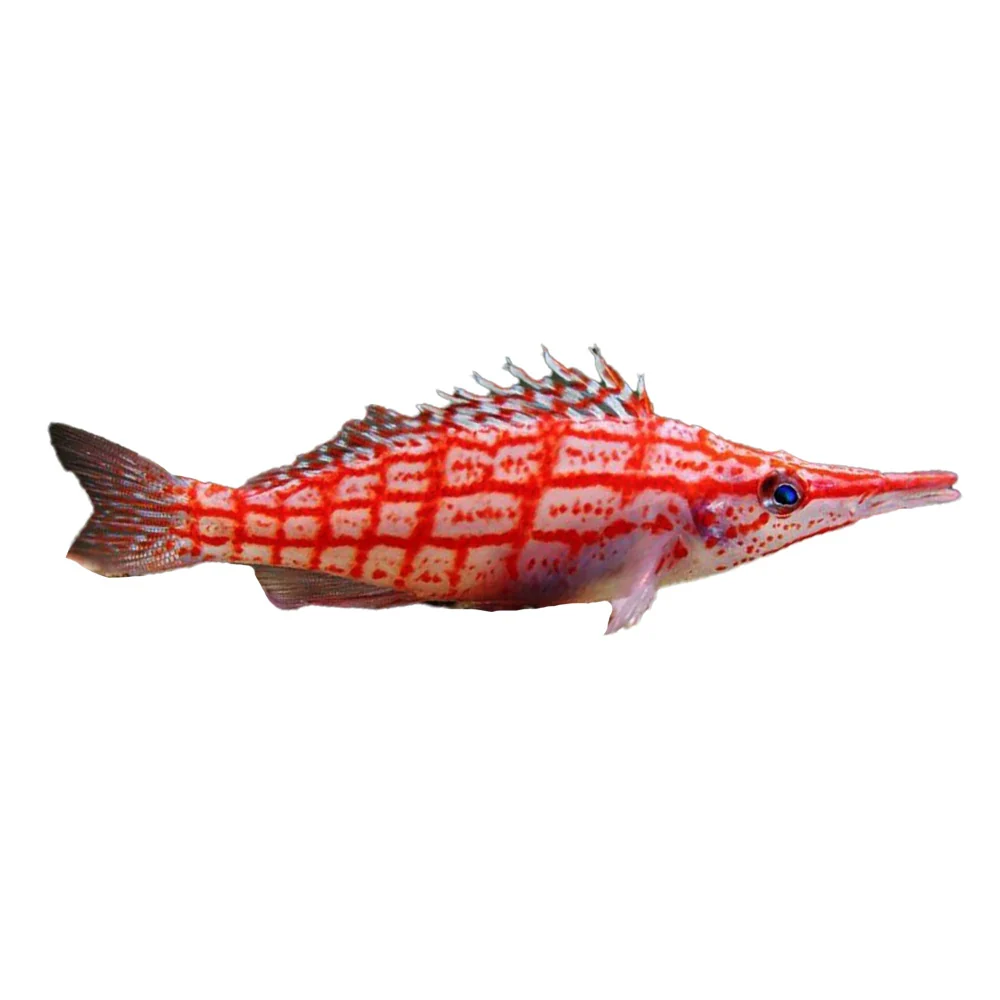
The Longnose Hawkfish has one of the most distinct silhouettes in the hobby:
-
The Snout: Features a long, tapered snout designed for reaching into narrow crevices in the reef to "snatch" small prey.
-
The Pattern: A stunning, red-and-white "crosshatch" or "plaid" pattern that runs across its entire body.
-
Fins: Like all Hawkfish, it has small tufts (cirri) on the tips of its dorsal spines. It lacks a swim bladder, which is why it "sits" rather than hovers.
-
The Eyes: Large and expressive, they move independently to track movement without the fish having to move its body.
Behaviour & Tank Compatibility
-
The Sentinel: This fish spends 90% of its time perched on a high point—often a Gorgonian, Leather Coral, or SPS colony. It "watches" the tank and will dart down at lightning speed to grab a piece of food before returning to its post.
-
Invertebrate Risk: Caution is required. It is a natural predator of small shrimp (like Sexy Shrimp or small Peppermint Shrimp). Larger Cleaner Shrimp or Fire Shrimp are usually safe, but use caution as the Hawkfish grows. It will not bother snails or hermit crabs.
-
Reef Safe: 100% Reef Safe regarding corals. In fact, they look most natural when perched among the branches of a healthy reef.
-
Tank Mates: Generally peaceful with mid-water swimmers. However, it can be aggressive toward other Hawkfish, Blennies, or Gobies that try to occupy its favorite perching spot.
Ideal Tank Setup
-
Tank Size: A minimum of 115L (30 Gallons). They are excellent for medium-sized reef tanks.
-
Rockwork & Perches: Provide plenty of vertical structure. They especially love tall branching corals (real or synthetic) and rock pinnacles that offer a 360-degree view of the tank.
-
Lid is MANDATORY: Longnose Hawkfish are "missile-like" jumpers. If they get excited during feeding or startled at night, they can easily launch themselves out of the tank.
-
Feeding: Very easy to feed. They greedily accept frozen mysis, brine shrimp, and finely chopped seafood. They may even learn to take pellets that land near their perch.
Why Choose the Longnose Hawkfish?
The Longnose Hawkfish is for the hobbyist who wants a highly observant and interactive inhabitant. It is a hardy, disease-resistant fish that adds a sophisticated "architectural" element to the reef.
Product Information
Product Information
Shipping & Returns
Shipping & Returns
Longnose Hawkfish (Oxycirrhites Typus)
Longnose Hawkfish (Oxycirrhites Typus)
Longnose Hawkfish (Oxycirrhites typus)
The Longnose Hawkfish is a favorite among reef enthusiasts who appreciate "character" fish. While the Flame Hawkfish brings intense color, the Longnose brings a unique, geometric pattern and a specialized snout that makes it look like a tiny, underwater surveyor. It is famous for its "perching" behavior, where it sits atop corals and rocks, swiveling its eyes to monitor the entire aquarium.
Key Information
-
Common Names: Longnose Hawkfish
-
Scientific Name: Oxycirrhites typus
-
Origin: Indo-Pacific (Red Sea to the Gulf of California)
-
Max Size: 13 cm (approx. 5 inches)
-
Lifespan: 7–10 years
-
Temperament: Peaceful to Semi-aggressive; territorial toward other bottom-dwellers
-
Diet: Carnivore – Specialist in small crustaceans
-
Care Level: Easy
Appearance & Identification
The Longnose Hawkfish has one of the most distinct silhouettes in the hobby:
-
The Snout: Features a long, tapered snout designed for reaching into narrow crevices in the reef to "snatch" small prey.
-
The Pattern: A stunning, red-and-white "crosshatch" or "plaid" pattern that runs across its entire body.
-
Fins: Like all Hawkfish, it has small tufts (cirri) on the tips of its dorsal spines. It lacks a swim bladder, which is why it "sits" rather than hovers.
-
The Eyes: Large and expressive, they move independently to track movement without the fish having to move its body.
Behaviour & Tank Compatibility
-
The Sentinel: This fish spends 90% of its time perched on a high point—often a Gorgonian, Leather Coral, or SPS colony. It "watches" the tank and will dart down at lightning speed to grab a piece of food before returning to its post.
-
Invertebrate Risk: Caution is required. It is a natural predator of small shrimp (like Sexy Shrimp or small Peppermint Shrimp). Larger Cleaner Shrimp or Fire Shrimp are usually safe, but use caution as the Hawkfish grows. It will not bother snails or hermit crabs.
-
Reef Safe: 100% Reef Safe regarding corals. In fact, they look most natural when perched among the branches of a healthy reef.
-
Tank Mates: Generally peaceful with mid-water swimmers. However, it can be aggressive toward other Hawkfish, Blennies, or Gobies that try to occupy its favorite perching spot.
Ideal Tank Setup
-
Tank Size: A minimum of 115L (30 Gallons). They are excellent for medium-sized reef tanks.
-
Rockwork & Perches: Provide plenty of vertical structure. They especially love tall branching corals (real or synthetic) and rock pinnacles that offer a 360-degree view of the tank.
-
Lid is MANDATORY: Longnose Hawkfish are "missile-like" jumpers. If they get excited during feeding or startled at night, they can easily launch themselves out of the tank.
-
Feeding: Very easy to feed. They greedily accept frozen mysis, brine shrimp, and finely chopped seafood. They may even learn to take pellets that land near their perch.
Why Choose the Longnose Hawkfish?
The Longnose Hawkfish is for the hobbyist who wants a highly observant and interactive inhabitant. It is a hardy, disease-resistant fish that adds a sophisticated "architectural" element to the reef.
Original: $71.51
-65%$71.51
$25.03Product Information
Product Information
Shipping & Returns
Shipping & Returns
Description
Longnose Hawkfish (Oxycirrhites typus)
The Longnose Hawkfish is a favorite among reef enthusiasts who appreciate "character" fish. While the Flame Hawkfish brings intense color, the Longnose brings a unique, geometric pattern and a specialized snout that makes it look like a tiny, underwater surveyor. It is famous for its "perching" behavior, where it sits atop corals and rocks, swiveling its eyes to monitor the entire aquarium.
Key Information
-
Common Names: Longnose Hawkfish
-
Scientific Name: Oxycirrhites typus
-
Origin: Indo-Pacific (Red Sea to the Gulf of California)
-
Max Size: 13 cm (approx. 5 inches)
-
Lifespan: 7–10 years
-
Temperament: Peaceful to Semi-aggressive; territorial toward other bottom-dwellers
-
Diet: Carnivore – Specialist in small crustaceans
-
Care Level: Easy
Appearance & Identification
The Longnose Hawkfish has one of the most distinct silhouettes in the hobby:
-
The Snout: Features a long, tapered snout designed for reaching into narrow crevices in the reef to "snatch" small prey.
-
The Pattern: A stunning, red-and-white "crosshatch" or "plaid" pattern that runs across its entire body.
-
Fins: Like all Hawkfish, it has small tufts (cirri) on the tips of its dorsal spines. It lacks a swim bladder, which is why it "sits" rather than hovers.
-
The Eyes: Large and expressive, they move independently to track movement without the fish having to move its body.
Behaviour & Tank Compatibility
-
The Sentinel: This fish spends 90% of its time perched on a high point—often a Gorgonian, Leather Coral, or SPS colony. It "watches" the tank and will dart down at lightning speed to grab a piece of food before returning to its post.
-
Invertebrate Risk: Caution is required. It is a natural predator of small shrimp (like Sexy Shrimp or small Peppermint Shrimp). Larger Cleaner Shrimp or Fire Shrimp are usually safe, but use caution as the Hawkfish grows. It will not bother snails or hermit crabs.
-
Reef Safe: 100% Reef Safe regarding corals. In fact, they look most natural when perched among the branches of a healthy reef.
-
Tank Mates: Generally peaceful with mid-water swimmers. However, it can be aggressive toward other Hawkfish, Blennies, or Gobies that try to occupy its favorite perching spot.
Ideal Tank Setup
-
Tank Size: A minimum of 115L (30 Gallons). They are excellent for medium-sized reef tanks.
-
Rockwork & Perches: Provide plenty of vertical structure. They especially love tall branching corals (real or synthetic) and rock pinnacles that offer a 360-degree view of the tank.
-
Lid is MANDATORY: Longnose Hawkfish are "missile-like" jumpers. If they get excited during feeding or startled at night, they can easily launch themselves out of the tank.
-
Feeding: Very easy to feed. They greedily accept frozen mysis, brine shrimp, and finely chopped seafood. They may even learn to take pellets that land near their perch.
Why Choose the Longnose Hawkfish?
The Longnose Hawkfish is for the hobbyist who wants a highly observant and interactive inhabitant. It is a hardy, disease-resistant fish that adds a sophisticated "architectural" element to the reef.