McCoskers Fairy Wrasse (Paracheilinus Mccoskeri)
McCosker’s Flasher Wrasse (Paracheilinus mccoskeri)
The McCosker’s Flasher Wrasse is a favorite among reef keepers for its incredible colors, small size, and peaceful nature. While often grouped with Fairy Wrasses, it is actually a Flasher Wrasse. The name comes from the male's spectacular behavior: during courtship or when excited, he "flashes" his fins, making his colors glow with near-neon intensity to impress females or ward off rivals.
Key Information
-
Common Names: McCosker’s Flasher Wrasse
-
Scientific Name: Paracheilinus mccoskeri
-
Origin: Indian Ocean (East Africa to the Andaman Sea)
-
Max Size: 6–8 cm (approx. 3 inches)
-
Lifespan: 3–5 years
-
Temperament: Peaceful; shy when first introduced
-
Diet: Carnivore – Planktivore
-
Care Level: Easy to Moderate
Appearance & Identification
McCosker’s is often confused with the Carpenter’s Flasher Wrasse, but it has distinct features:
-
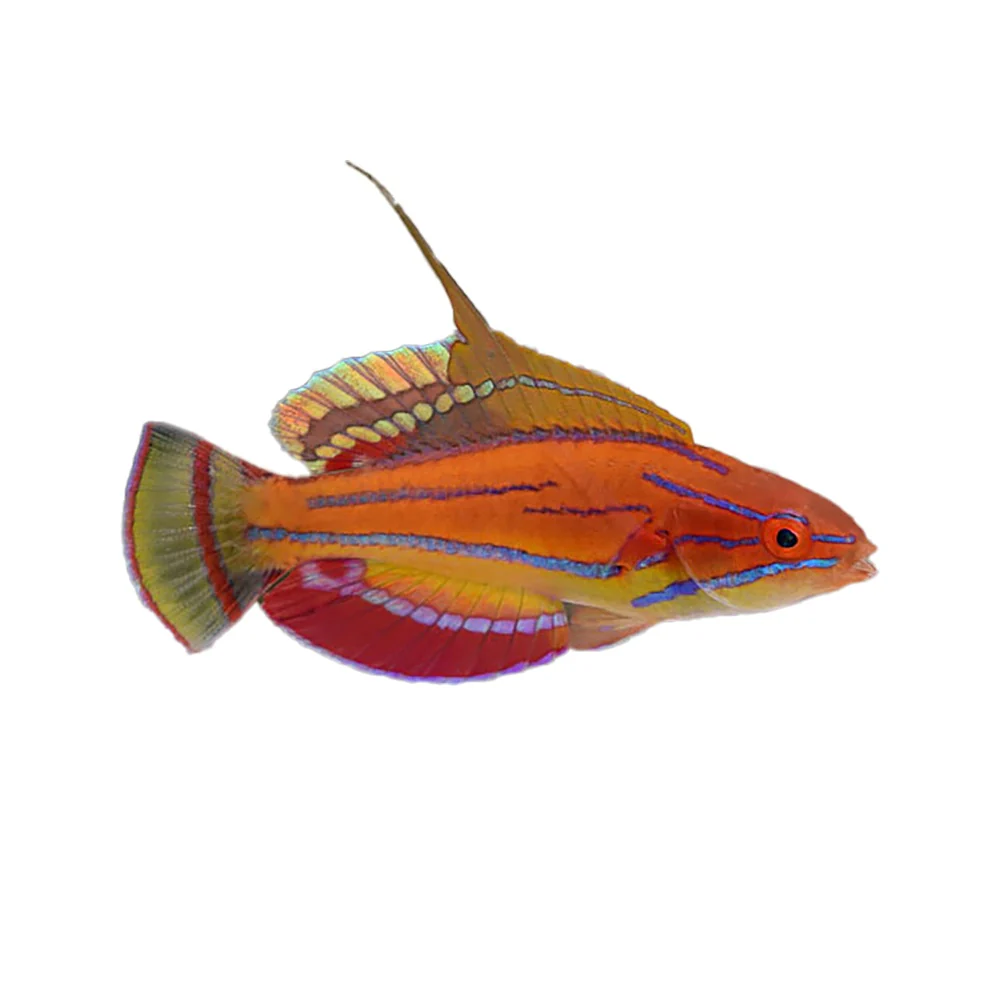
The Colors: A vibrant orange body with horizontal electric blue stripes. The belly is usually a creamy white or light yellow.
-
The Dorsal Fin: Males have a single, elongated filament (spike) on their dorsal fin. (Carpenter’s Wrasses usually have 2–4 filaments).
-
The Tail: Features a rounded tail with blue trim.
-
The "Flash": When displaying, the fins (especially the anal fin) expand, and the colors shift into a metallic, glowing palette that is one of the most beautiful sights in the hobby.
Behaviour & Tank Compatibility
-
Peaceful Citizen: This is one of the most docile wrasses. It will never bother corals or invertebrates.
-
Social Structure: They thrive in a harem (one male with 2+ females). In the presence of females, the male will "flash" much more frequently.
-
The "Jump" Factor: Flasher wrasses are extremely high-risk jumpers. They are very fast and can shoot through even the smallest opening in a lid.
-
Tank Mates: Excellent with Firefish, Anthias, and peaceful Gobies. Avoid keeping them with aggressive "bully" wrasses like the Six-Line, as the McCosker's is easily intimidated and may stay in hiding.
Ideal Tank Setup
-
Tank Size: A minimum of 75L (20 Gallons) for a single fish, but 115L+ (30+ Gallons) is better for a group.
-
Lid is Mandatory: You must have a tight-fitting mesh or glass lid. No gaps larger than 0.5 cm.
-
Rockwork: Provide plenty of live rock with crevices and caves. They sleep in the rocks inside a protective mucus cocoon.
-
Water Flow: They prefer moderate flow. They are active swimmers that love to hover in the water column looking for food.
Dietary Needs
They have very high metabolisms and small stomachs:
-
Feeding Frequency: Ideally feed 2–3 times daily in small amounts.
-
Preferred Foods: Small frozen meaty foods like mysis, enriched brine shrimp, Calanus, and copepods.
-
Dry Foods: Most will readily accept high-quality marine flakes and small pellets once they are comfortable in the tank.
Why Choose the McCosker’s Flasher Wrasse?
The McCosker’s is for the hobbyist who wants maximum color in a small package. It is one of the most "entertaining" fish to watch because of its active swimming and flashing displays. For a community reef or a nano tank, it provides a level of brilliance and activity that few other species can match—just make sure your lid is secure!
Product Information
Product Information
Shipping & Returns
Shipping & Returns
McCoskers Fairy Wrasse (Paracheilinus Mccoskeri)
McCoskers Fairy Wrasse (Paracheilinus Mccoskeri)
McCosker’s Flasher Wrasse (Paracheilinus mccoskeri)
The McCosker’s Flasher Wrasse is a favorite among reef keepers for its incredible colors, small size, and peaceful nature. While often grouped with Fairy Wrasses, it is actually a Flasher Wrasse. The name comes from the male's spectacular behavior: during courtship or when excited, he "flashes" his fins, making his colors glow with near-neon intensity to impress females or ward off rivals.
Key Information
-
Common Names: McCosker’s Flasher Wrasse
-
Scientific Name: Paracheilinus mccoskeri
-
Origin: Indian Ocean (East Africa to the Andaman Sea)
-
Max Size: 6–8 cm (approx. 3 inches)
-
Lifespan: 3–5 years
-
Temperament: Peaceful; shy when first introduced
-
Diet: Carnivore – Planktivore
-
Care Level: Easy to Moderate
Appearance & Identification
McCosker’s is often confused with the Carpenter’s Flasher Wrasse, but it has distinct features:
-
The Colors: A vibrant orange body with horizontal electric blue stripes. The belly is usually a creamy white or light yellow.
-
The Dorsal Fin: Males have a single, elongated filament (spike) on their dorsal fin. (Carpenter’s Wrasses usually have 2–4 filaments).
-
The Tail: Features a rounded tail with blue trim.
-
The "Flash": When displaying, the fins (especially the anal fin) expand, and the colors shift into a metallic, glowing palette that is one of the most beautiful sights in the hobby.
Behaviour & Tank Compatibility
-
Peaceful Citizen: This is one of the most docile wrasses. It will never bother corals or invertebrates.
-
Social Structure: They thrive in a harem (one male with 2+ females). In the presence of females, the male will "flash" much more frequently.
-
The "Jump" Factor: Flasher wrasses are extremely high-risk jumpers. They are very fast and can shoot through even the smallest opening in a lid.
-
Tank Mates: Excellent with Firefish, Anthias, and peaceful Gobies. Avoid keeping them with aggressive "bully" wrasses like the Six-Line, as the McCosker's is easily intimidated and may stay in hiding.
Ideal Tank Setup
-
Tank Size: A minimum of 75L (20 Gallons) for a single fish, but 115L+ (30+ Gallons) is better for a group.
-
Lid is Mandatory: You must have a tight-fitting mesh or glass lid. No gaps larger than 0.5 cm.
-
Rockwork: Provide plenty of live rock with crevices and caves. They sleep in the rocks inside a protective mucus cocoon.
-
Water Flow: They prefer moderate flow. They are active swimmers that love to hover in the water column looking for food.
Dietary Needs
They have very high metabolisms and small stomachs:
-
Feeding Frequency: Ideally feed 2–3 times daily in small amounts.
-
Preferred Foods: Small frozen meaty foods like mysis, enriched brine shrimp, Calanus, and copepods.
-
Dry Foods: Most will readily accept high-quality marine flakes and small pellets once they are comfortable in the tank.
Why Choose the McCosker’s Flasher Wrasse?
The McCosker’s is for the hobbyist who wants maximum color in a small package. It is one of the most "entertaining" fish to watch because of its active swimming and flashing displays. For a community reef or a nano tank, it provides a level of brilliance and activity that few other species can match—just make sure your lid is secure!
Original: $53.64
-65%$53.64
$18.77Product Information
Product Information
Shipping & Returns
Shipping & Returns
Description
McCosker’s Flasher Wrasse (Paracheilinus mccoskeri)
The McCosker’s Flasher Wrasse is a favorite among reef keepers for its incredible colors, small size, and peaceful nature. While often grouped with Fairy Wrasses, it is actually a Flasher Wrasse. The name comes from the male's spectacular behavior: during courtship or when excited, he "flashes" his fins, making his colors glow with near-neon intensity to impress females or ward off rivals.
Key Information
-
Common Names: McCosker’s Flasher Wrasse
-
Scientific Name: Paracheilinus mccoskeri
-
Origin: Indian Ocean (East Africa to the Andaman Sea)
-
Max Size: 6–8 cm (approx. 3 inches)
-
Lifespan: 3–5 years
-
Temperament: Peaceful; shy when first introduced
-
Diet: Carnivore – Planktivore
-
Care Level: Easy to Moderate
Appearance & Identification
McCosker’s is often confused with the Carpenter’s Flasher Wrasse, but it has distinct features:
-
The Colors: A vibrant orange body with horizontal electric blue stripes. The belly is usually a creamy white or light yellow.
-
The Dorsal Fin: Males have a single, elongated filament (spike) on their dorsal fin. (Carpenter’s Wrasses usually have 2–4 filaments).
-
The Tail: Features a rounded tail with blue trim.
-
The "Flash": When displaying, the fins (especially the anal fin) expand, and the colors shift into a metallic, glowing palette that is one of the most beautiful sights in the hobby.
Behaviour & Tank Compatibility
-
Peaceful Citizen: This is one of the most docile wrasses. It will never bother corals or invertebrates.
-
Social Structure: They thrive in a harem (one male with 2+ females). In the presence of females, the male will "flash" much more frequently.
-
The "Jump" Factor: Flasher wrasses are extremely high-risk jumpers. They are very fast and can shoot through even the smallest opening in a lid.
-
Tank Mates: Excellent with Firefish, Anthias, and peaceful Gobies. Avoid keeping them with aggressive "bully" wrasses like the Six-Line, as the McCosker's is easily intimidated and may stay in hiding.
Ideal Tank Setup
-
Tank Size: A minimum of 75L (20 Gallons) for a single fish, but 115L+ (30+ Gallons) is better for a group.
-
Lid is Mandatory: You must have a tight-fitting mesh or glass lid. No gaps larger than 0.5 cm.
-
Rockwork: Provide plenty of live rock with crevices and caves. They sleep in the rocks inside a protective mucus cocoon.
-
Water Flow: They prefer moderate flow. They are active swimmers that love to hover in the water column looking for food.
Dietary Needs
They have very high metabolisms and small stomachs:
-
Feeding Frequency: Ideally feed 2–3 times daily in small amounts.
-
Preferred Foods: Small frozen meaty foods like mysis, enriched brine shrimp, Calanus, and copepods.
-
Dry Foods: Most will readily accept high-quality marine flakes and small pellets once they are comfortable in the tank.
Why Choose the McCosker’s Flasher Wrasse?
The McCosker’s is for the hobbyist who wants maximum color in a small package. It is one of the most "entertaining" fish to watch because of its active swimming and flashing displays. For a community reef or a nano tank, it provides a level of brilliance and activity that few other species can match—just make sure your lid is secure!