Mimic Tang (Acanthurus Pyroferus)
Mimic Tang (Acanthurus pyroferus)
The Mimic Tang, also known as the Chocolate Tang or Orange-gill Tang, is one of the most fascinating "actors" of the coral reef. Native to the Indo-Pacific (including Indonesian waters), this fish has evolved a brilliant survival strategy: as a juvenile, it perfectly mimics the appearance of various Dwarf Angelfish to avoid predation. Once it outgrows its "disguise," it transforms into a sleek, sophisticated adult.
Key Information
-
Common Names: Mimic Tang, Chocolate Tang, Lemon Mimic Tang, Orange-gill Tang
-
Scientific Name: Acanthurus pyroferus
-
Origin: Indo-Pacific (Indonesia, Philippines, Japan to the Marquesas)
-
Max Size: 20–25 cm (approx. 8–10 inches)
-
Lifespan: 10–15 years
-
Temperament: Semi-aggressive; generally peaceful for an Acanthurus
-
Diet: Herbivore – Excellent grazer of hair and film algae
-
Care Level: Moderate
Appearance: The Great Disguise
The Mimic Tang is famous for its ontogenetic color change (changing color as it ages):
-
The Juvenile (The Mimic): To stay safe from predators, juveniles mimic specific Centropyge Angelfish found in their region.
-
Lemonpeel Morph: Bright yellow with blue rings around the eyes.
-
Herald's Morph: Solid bright yellow.
-
Eibli's Morph: Grey with orange vertical pinstripes and a black tail.
-
-
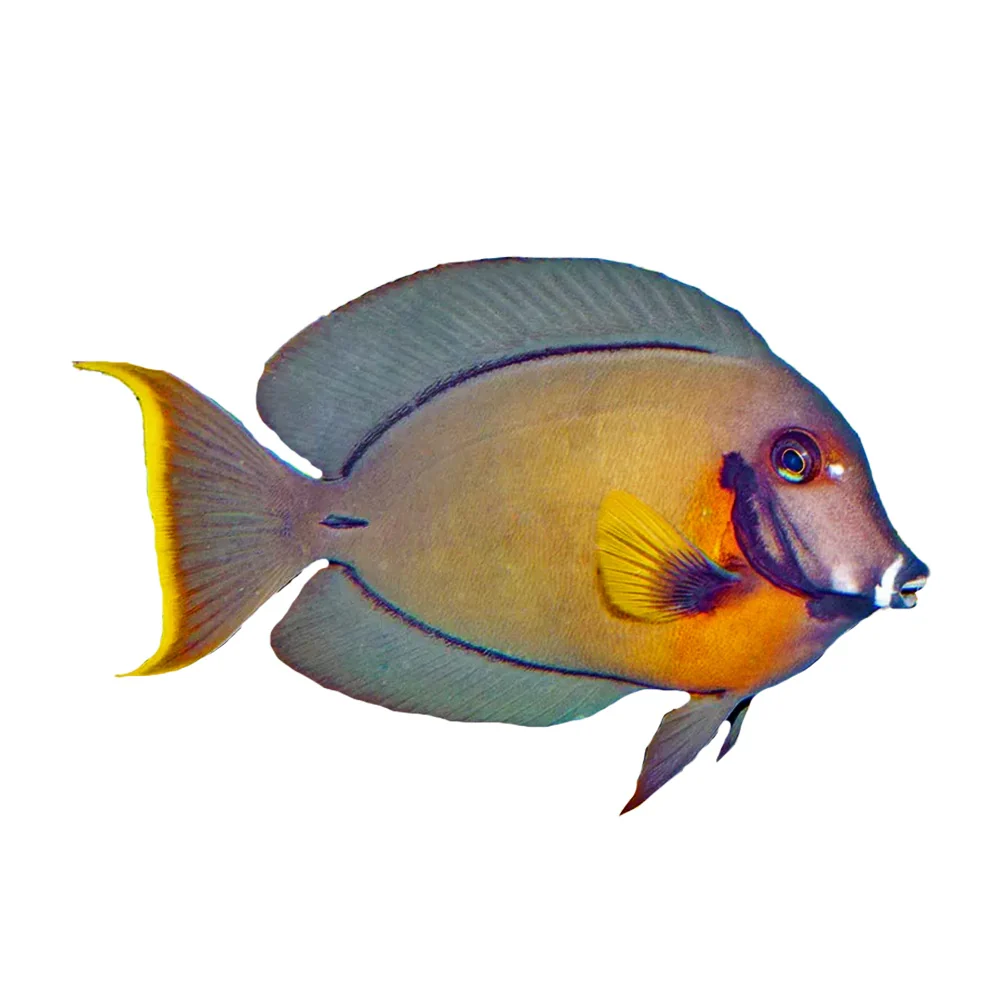
The Adult (The Chocolate): As they mature, they lose the angelfish colors and turn a beautiful chocolate brown to tan. They develop a bright orange-to-yellow patch behind the gill cover and a yellow-topped dorsal fin. Their tail becomes deeply forked and develops a light yellow or white edge.
Behaviour & Tank Compatibility
-
The Hardworking Grazer: This is one of the best "utility" tangs. They are constantly picking at rocks and glass, keeping green hair algae and film algae under control.
-
Mannerisms: They are generally more peaceful than the Powder Blue or Clown Tang. However, they will still be territorial toward other tangs with a similar body shape.
-
Reef Safe: 100% Reef Safe. They are a benefit to any reef system by keeping coral surfaces clean.
-
Tank Mates: Excellent with Clownfish, Wrasses, and Anthias. If adding other tangs, try to stick with different genera like Zebrasoma (Yellow Tang) or Ctenochaetus (Kole Tang).
Ideal Tank Setup
-
Tank Size: A minimum of 285L (75 Gallons) is required for a juvenile, but 475L (125 Gallons) is much better for an adult to allow for their active swimming.
-
Rockwork: Provide plenty of live rock with caves and swim-throughs. They need a "home base" to retreat to at night.
-
Water Flow: Like all tangs, they require high oxygen levels and strong water movement.
-
Lid: They are fast swimmers and can jump if they feel threatened or during a territorial chase. A secure lid is recommended.
Dietary Needs
To maintain their immune system and prevent HLLE (Head and Lateral Line Erosion):
-
Primary Diet: Daily Nori (dried seaweed) is essential. They prefer green and purple varieties.
-
Supplemental: High-quality herbivore pellets, spirulina-enriched flakes, and frozen mysis shrimp.
-
Vitamins: Soaking food in a vitamin supplement like Selcon is highly recommended to keep their colors vibrant.
Why Choose the Mimic Tang?
The Mimic Tang is for the hobbyist who appreciates evolutionary wonders. It is incredibly rewarding to purchase a bright yellow "Lemonpeel" juvenile and watch it transition into the regal, chocolate-brown adult over a year or two. It is a hardy, functional, and peaceful addition that provides a unique story to your aquarium display.
Product Information
Product Information
Shipping & Returns
Shipping & Returns
Mimic Tang (Acanthurus Pyroferus)
Mimic Tang (Acanthurus Pyroferus)
Mimic Tang (Acanthurus pyroferus)
The Mimic Tang, also known as the Chocolate Tang or Orange-gill Tang, is one of the most fascinating "actors" of the coral reef. Native to the Indo-Pacific (including Indonesian waters), this fish has evolved a brilliant survival strategy: as a juvenile, it perfectly mimics the appearance of various Dwarf Angelfish to avoid predation. Once it outgrows its "disguise," it transforms into a sleek, sophisticated adult.
Key Information
-
Common Names: Mimic Tang, Chocolate Tang, Lemon Mimic Tang, Orange-gill Tang
-
Scientific Name: Acanthurus pyroferus
-
Origin: Indo-Pacific (Indonesia, Philippines, Japan to the Marquesas)
-
Max Size: 20–25 cm (approx. 8–10 inches)
-
Lifespan: 10–15 years
-
Temperament: Semi-aggressive; generally peaceful for an Acanthurus
-
Diet: Herbivore – Excellent grazer of hair and film algae
-
Care Level: Moderate
Appearance: The Great Disguise
The Mimic Tang is famous for its ontogenetic color change (changing color as it ages):
-
The Juvenile (The Mimic): To stay safe from predators, juveniles mimic specific Centropyge Angelfish found in their region.
-
Lemonpeel Morph: Bright yellow with blue rings around the eyes.
-
Herald's Morph: Solid bright yellow.
-
Eibli's Morph: Grey with orange vertical pinstripes and a black tail.
-
-
The Adult (The Chocolate): As they mature, they lose the angelfish colors and turn a beautiful chocolate brown to tan. They develop a bright orange-to-yellow patch behind the gill cover and a yellow-topped dorsal fin. Their tail becomes deeply forked and develops a light yellow or white edge.
Behaviour & Tank Compatibility
-
The Hardworking Grazer: This is one of the best "utility" tangs. They are constantly picking at rocks and glass, keeping green hair algae and film algae under control.
-
Mannerisms: They are generally more peaceful than the Powder Blue or Clown Tang. However, they will still be territorial toward other tangs with a similar body shape.
-
Reef Safe: 100% Reef Safe. They are a benefit to any reef system by keeping coral surfaces clean.
-
Tank Mates: Excellent with Clownfish, Wrasses, and Anthias. If adding other tangs, try to stick with different genera like Zebrasoma (Yellow Tang) or Ctenochaetus (Kole Tang).
Ideal Tank Setup
-
Tank Size: A minimum of 285L (75 Gallons) is required for a juvenile, but 475L (125 Gallons) is much better for an adult to allow for their active swimming.
-
Rockwork: Provide plenty of live rock with caves and swim-throughs. They need a "home base" to retreat to at night.
-
Water Flow: Like all tangs, they require high oxygen levels and strong water movement.
-
Lid: They are fast swimmers and can jump if they feel threatened or during a territorial chase. A secure lid is recommended.
Dietary Needs
To maintain their immune system and prevent HLLE (Head and Lateral Line Erosion):
-
Primary Diet: Daily Nori (dried seaweed) is essential. They prefer green and purple varieties.
-
Supplemental: High-quality herbivore pellets, spirulina-enriched flakes, and frozen mysis shrimp.
-
Vitamins: Soaking food in a vitamin supplement like Selcon is highly recommended to keep their colors vibrant.
Why Choose the Mimic Tang?
The Mimic Tang is for the hobbyist who appreciates evolutionary wonders. It is incredibly rewarding to purchase a bright yellow "Lemonpeel" juvenile and watch it transition into the regal, chocolate-brown adult over a year or two. It is a hardy, functional, and peaceful addition that provides a unique story to your aquarium display.
Original: $67.94
-65%$67.94
$23.78Product Information
Product Information
Shipping & Returns
Shipping & Returns
Description
Mimic Tang (Acanthurus pyroferus)
The Mimic Tang, also known as the Chocolate Tang or Orange-gill Tang, is one of the most fascinating "actors" of the coral reef. Native to the Indo-Pacific (including Indonesian waters), this fish has evolved a brilliant survival strategy: as a juvenile, it perfectly mimics the appearance of various Dwarf Angelfish to avoid predation. Once it outgrows its "disguise," it transforms into a sleek, sophisticated adult.
Key Information
-
Common Names: Mimic Tang, Chocolate Tang, Lemon Mimic Tang, Orange-gill Tang
-
Scientific Name: Acanthurus pyroferus
-
Origin: Indo-Pacific (Indonesia, Philippines, Japan to the Marquesas)
-
Max Size: 20–25 cm (approx. 8–10 inches)
-
Lifespan: 10–15 years
-
Temperament: Semi-aggressive; generally peaceful for an Acanthurus
-
Diet: Herbivore – Excellent grazer of hair and film algae
-
Care Level: Moderate
Appearance: The Great Disguise
The Mimic Tang is famous for its ontogenetic color change (changing color as it ages):
-
The Juvenile (The Mimic): To stay safe from predators, juveniles mimic specific Centropyge Angelfish found in their region.
-
Lemonpeel Morph: Bright yellow with blue rings around the eyes.
-
Herald's Morph: Solid bright yellow.
-
Eibli's Morph: Grey with orange vertical pinstripes and a black tail.
-
-
The Adult (The Chocolate): As they mature, they lose the angelfish colors and turn a beautiful chocolate brown to tan. They develop a bright orange-to-yellow patch behind the gill cover and a yellow-topped dorsal fin. Their tail becomes deeply forked and develops a light yellow or white edge.
Behaviour & Tank Compatibility
-
The Hardworking Grazer: This is one of the best "utility" tangs. They are constantly picking at rocks and glass, keeping green hair algae and film algae under control.
-
Mannerisms: They are generally more peaceful than the Powder Blue or Clown Tang. However, they will still be territorial toward other tangs with a similar body shape.
-
Reef Safe: 100% Reef Safe. They are a benefit to any reef system by keeping coral surfaces clean.
-
Tank Mates: Excellent with Clownfish, Wrasses, and Anthias. If adding other tangs, try to stick with different genera like Zebrasoma (Yellow Tang) or Ctenochaetus (Kole Tang).
Ideal Tank Setup
-
Tank Size: A minimum of 285L (75 Gallons) is required for a juvenile, but 475L (125 Gallons) is much better for an adult to allow for their active swimming.
-
Rockwork: Provide plenty of live rock with caves and swim-throughs. They need a "home base" to retreat to at night.
-
Water Flow: Like all tangs, they require high oxygen levels and strong water movement.
-
Lid: They are fast swimmers and can jump if they feel threatened or during a territorial chase. A secure lid is recommended.
Dietary Needs
To maintain their immune system and prevent HLLE (Head and Lateral Line Erosion):
-
Primary Diet: Daily Nori (dried seaweed) is essential. They prefer green and purple varieties.
-
Supplemental: High-quality herbivore pellets, spirulina-enriched flakes, and frozen mysis shrimp.
-
Vitamins: Soaking food in a vitamin supplement like Selcon is highly recommended to keep their colors vibrant.
Why Choose the Mimic Tang?
The Mimic Tang is for the hobbyist who appreciates evolutionary wonders. It is incredibly rewarding to purchase a bright yellow "Lemonpeel" juvenile and watch it transition into the regal, chocolate-brown adult over a year or two. It is a hardy, functional, and peaceful addition that provides a unique story to your aquarium display.