Moorish Idol (Zanclus Cornutus)
Moorish Idol (Zanclus cornutus)
The Moorish Idol is the "holy grail" of the marine aquarium world. Immortalized as the character "Gill" in Finding Nemo, it is arguably the most iconic and graceful fish in the ocean. However, it carries a heavy reputation: it is notoriously one of the most difficult fish to keep alive in captivity. For many, it represents the ultimate test of a reef keeper's skill and dedication.
Key Information
-
Common Names: Moorish Idol
-
Scientific Name: Zanclus cornutus
-
Origin: Indo-Pacific and Eastern Pacific (from the Red Sea to Peru)
-
Max Size: 23 cm (approx. 9 inches)
-
Lifespan: 2–4 years in captivity (can be 10+ in the wild or expert care)
-
Temperament: Peaceful but easily stressed
-
Diet: Omnivore – Specialist feeder (sponges and tunicates)
-
Care Level: Expert / Difficult
Appearance & Identification
The Moorish Idol is unique—it is the only member of its entire family (Zanclidae):
-
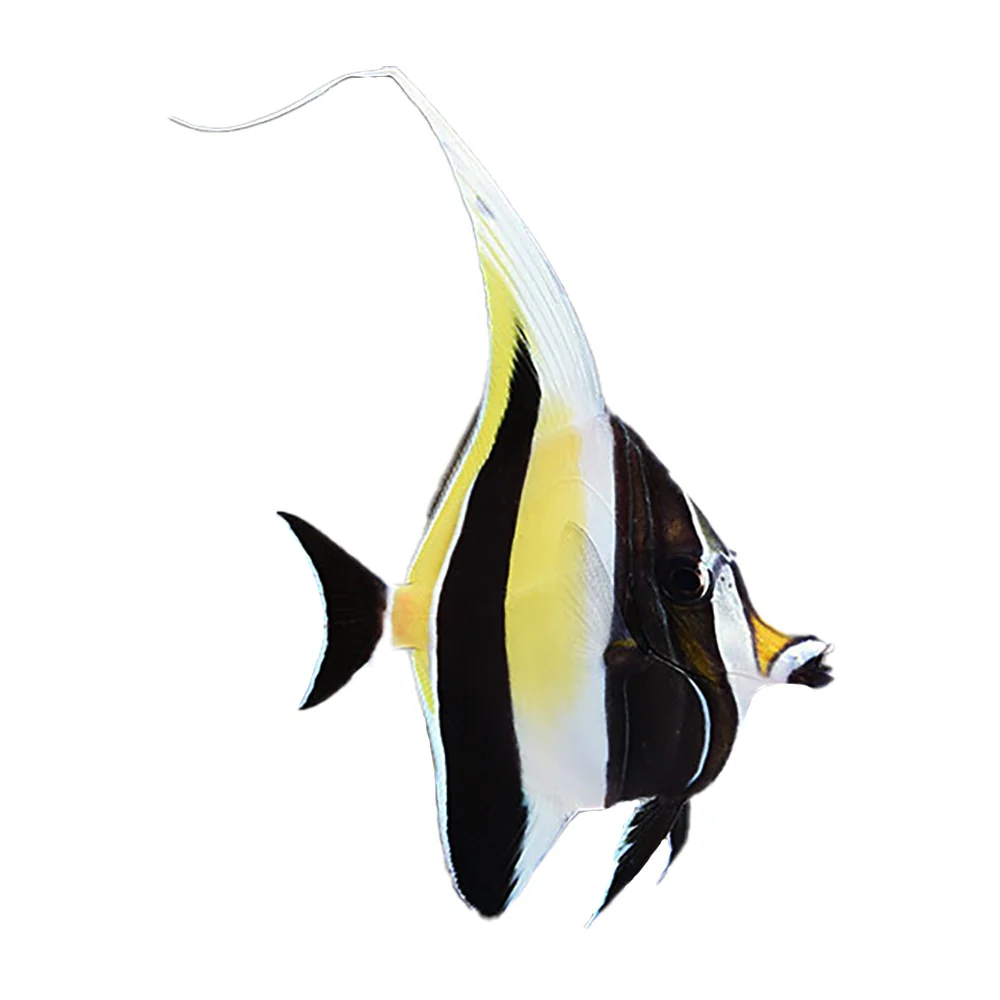
The "Pennant": Its most striking feature is the extraordinarily long, white dorsal filament (pennant) that trails behind it as it swims.
-
Coloration: Features bold vertical bands of black, white, and vibrant yellow.
-
The Snout: It has a long, tubular snout with a small, specialized mouth, and a distinct orange-to-yellow saddle across the nose.
-
VS. Bannerfish: It is often confused with the Heniochus Butterflyfish (the "Poor Man’s Moorish Idol"). You can tell the difference by the Idol’s orange nose mask and its more "disk-like" body shape.
Why are they so difficult?
-
Dietary Specialization: In the wild, they eat primarily sponges and tunicates. Most aquarium foods do not provide the specific nutrition they need, leading to a slow decline (wasting away).
-
Shipping Stress: They have a very high metabolism and a low tolerance for the ammonia spikes that occur during transport.
-
Acclimation: They are famously finicky eaters. Getting one to take its first bite of "man-made" food is a major hurdle.
Behaviour & Tank Compatibility
-
Reef Safe (Caution): They are generally safe with most corals, but they are known to nip at LPS corals, zoanthids, and clam mantles if they are not getting enough nutrition.
-
The "Graceful" Swimmer: They need a lot of open water to move their long pennant without it snagging on rocks or powerheads.
-
Social Structure: They are best kept singly or in a proven mated pair. In small groups, they often become aggressive toward each other as they compete for limited food.
-
Tank Mates: Must be kept with peaceful, non-competitive fish. Fast-moving "pigs" like large Tangs may eat all the food before the sensitive Idol even realizes it’s dinner time.
Ideal Tank Setup
-
Tank Size: A minimum of 475L (125 Gallons) is required. A 6-foot tank is much better to accommodate their swimming patterns.
-
Pristine Water: They require extremely high water quality and high oxygenation. A massive protein skimmer and regular large water changes are mandatory.
-
Feeding: You must feed them multiple times a day (5–6 small feedings). Offering specialized sponge-based frozen foods and high-quality Nori is essential.
-
Rockwork: Provide large, open caves and plenty of grazing surfaces, but ensure the "lanes" are wide enough for their trailing fin.
Why Choose the Moorish Idol?
The Moorish Idol is for the hobbyist who wants a living masterpiece and is prepared to dedicate their daily schedule to its care. It is not a "set and forget" fish.
Product Information
Product Information
Shipping & Returns
Shipping & Returns
Moorish Idol (Zanclus Cornutus)
Moorish Idol (Zanclus Cornutus)
Moorish Idol (Zanclus cornutus)
The Moorish Idol is the "holy grail" of the marine aquarium world. Immortalized as the character "Gill" in Finding Nemo, it is arguably the most iconic and graceful fish in the ocean. However, it carries a heavy reputation: it is notoriously one of the most difficult fish to keep alive in captivity. For many, it represents the ultimate test of a reef keeper's skill and dedication.
Key Information
-
Common Names: Moorish Idol
-
Scientific Name: Zanclus cornutus
-
Origin: Indo-Pacific and Eastern Pacific (from the Red Sea to Peru)
-
Max Size: 23 cm (approx. 9 inches)
-
Lifespan: 2–4 years in captivity (can be 10+ in the wild or expert care)
-
Temperament: Peaceful but easily stressed
-
Diet: Omnivore – Specialist feeder (sponges and tunicates)
-
Care Level: Expert / Difficult
Appearance & Identification
The Moorish Idol is unique—it is the only member of its entire family (Zanclidae):
-
The "Pennant": Its most striking feature is the extraordinarily long, white dorsal filament (pennant) that trails behind it as it swims.
-
Coloration: Features bold vertical bands of black, white, and vibrant yellow.
-
The Snout: It has a long, tubular snout with a small, specialized mouth, and a distinct orange-to-yellow saddle across the nose.
-
VS. Bannerfish: It is often confused with the Heniochus Butterflyfish (the "Poor Man’s Moorish Idol"). You can tell the difference by the Idol’s orange nose mask and its more "disk-like" body shape.
Why are they so difficult?
-
Dietary Specialization: In the wild, they eat primarily sponges and tunicates. Most aquarium foods do not provide the specific nutrition they need, leading to a slow decline (wasting away).
-
Shipping Stress: They have a very high metabolism and a low tolerance for the ammonia spikes that occur during transport.
-
Acclimation: They are famously finicky eaters. Getting one to take its first bite of "man-made" food is a major hurdle.
Behaviour & Tank Compatibility
-
Reef Safe (Caution): They are generally safe with most corals, but they are known to nip at LPS corals, zoanthids, and clam mantles if they are not getting enough nutrition.
-
The "Graceful" Swimmer: They need a lot of open water to move their long pennant without it snagging on rocks or powerheads.
-
Social Structure: They are best kept singly or in a proven mated pair. In small groups, they often become aggressive toward each other as they compete for limited food.
-
Tank Mates: Must be kept with peaceful, non-competitive fish. Fast-moving "pigs" like large Tangs may eat all the food before the sensitive Idol even realizes it’s dinner time.
Ideal Tank Setup
-
Tank Size: A minimum of 475L (125 Gallons) is required. A 6-foot tank is much better to accommodate their swimming patterns.
-
Pristine Water: They require extremely high water quality and high oxygenation. A massive protein skimmer and regular large water changes are mandatory.
-
Feeding: You must feed them multiple times a day (5–6 small feedings). Offering specialized sponge-based frozen foods and high-quality Nori is essential.
-
Rockwork: Provide large, open caves and plenty of grazing surfaces, but ensure the "lanes" are wide enough for their trailing fin.
Why Choose the Moorish Idol?
The Moorish Idol is for the hobbyist who wants a living masterpiece and is prepared to dedicate their daily schedule to its care. It is not a "set and forget" fish.
Original: $71.51
-65%$71.51
$25.03Product Information
Product Information
Shipping & Returns
Shipping & Returns
Description
Moorish Idol (Zanclus cornutus)
The Moorish Idol is the "holy grail" of the marine aquarium world. Immortalized as the character "Gill" in Finding Nemo, it is arguably the most iconic and graceful fish in the ocean. However, it carries a heavy reputation: it is notoriously one of the most difficult fish to keep alive in captivity. For many, it represents the ultimate test of a reef keeper's skill and dedication.
Key Information
-
Common Names: Moorish Idol
-
Scientific Name: Zanclus cornutus
-
Origin: Indo-Pacific and Eastern Pacific (from the Red Sea to Peru)
-
Max Size: 23 cm (approx. 9 inches)
-
Lifespan: 2–4 years in captivity (can be 10+ in the wild or expert care)
-
Temperament: Peaceful but easily stressed
-
Diet: Omnivore – Specialist feeder (sponges and tunicates)
-
Care Level: Expert / Difficult
Appearance & Identification
The Moorish Idol is unique—it is the only member of its entire family (Zanclidae):
-
The "Pennant": Its most striking feature is the extraordinarily long, white dorsal filament (pennant) that trails behind it as it swims.
-
Coloration: Features bold vertical bands of black, white, and vibrant yellow.
-
The Snout: It has a long, tubular snout with a small, specialized mouth, and a distinct orange-to-yellow saddle across the nose.
-
VS. Bannerfish: It is often confused with the Heniochus Butterflyfish (the "Poor Man’s Moorish Idol"). You can tell the difference by the Idol’s orange nose mask and its more "disk-like" body shape.
Why are they so difficult?
-
Dietary Specialization: In the wild, they eat primarily sponges and tunicates. Most aquarium foods do not provide the specific nutrition they need, leading to a slow decline (wasting away).
-
Shipping Stress: They have a very high metabolism and a low tolerance for the ammonia spikes that occur during transport.
-
Acclimation: They are famously finicky eaters. Getting one to take its first bite of "man-made" food is a major hurdle.
Behaviour & Tank Compatibility
-
Reef Safe (Caution): They are generally safe with most corals, but they are known to nip at LPS corals, zoanthids, and clam mantles if they are not getting enough nutrition.
-
The "Graceful" Swimmer: They need a lot of open water to move their long pennant without it snagging on rocks or powerheads.
-
Social Structure: They are best kept singly or in a proven mated pair. In small groups, they often become aggressive toward each other as they compete for limited food.
-
Tank Mates: Must be kept with peaceful, non-competitive fish. Fast-moving "pigs" like large Tangs may eat all the food before the sensitive Idol even realizes it’s dinner time.
Ideal Tank Setup
-
Tank Size: A minimum of 475L (125 Gallons) is required. A 6-foot tank is much better to accommodate their swimming patterns.
-
Pristine Water: They require extremely high water quality and high oxygenation. A massive protein skimmer and regular large water changes are mandatory.
-
Feeding: You must feed them multiple times a day (5–6 small feedings). Offering specialized sponge-based frozen foods and high-quality Nori is essential.
-
Rockwork: Provide large, open caves and plenty of grazing surfaces, but ensure the "lanes" are wide enough for their trailing fin.
Why Choose the Moorish Idol?
The Moorish Idol is for the hobbyist who wants a living masterpiece and is prepared to dedicate their daily schedule to its care. It is not a "set and forget" fish.