Orange Skunk Clownfish (Amphiprion Sandaracinos)
Orange Skunk Clownfish (Amphiprion sandaracinos)
The Orange Skunk Clownfish is a delicate and sophisticated alternative to the common Ocellaris. While it lacks the bold white vertical bands of most clownfish, it is prized for its sleek, "racing stripe" aesthetic. It is generally more timid and peaceful than its cousins, making it an excellent choice for hobbyists who want a more natural, subtle reef look.
Key Information
-
Common Names: Orange Skunk Clownfish, Yellow Skunk Clownfish
-
Scientific Name: Amphiprion sandaracinos
-
Origin: Western Pacific (Indonesia, Philippines, Solomon Islands)
-
Max Size: 10 cm (approx. 4 inches)
-
Lifespan: 10–15 years
-
Temperament: Peaceful to Semi-aggressive (Timid for a Clownfish)
-
Diet: Omnivore – Easy to feed
-
Care Level: Easy
Appearance & Identification
The Orange Skunk is defined by its clean, minimal markings:
-
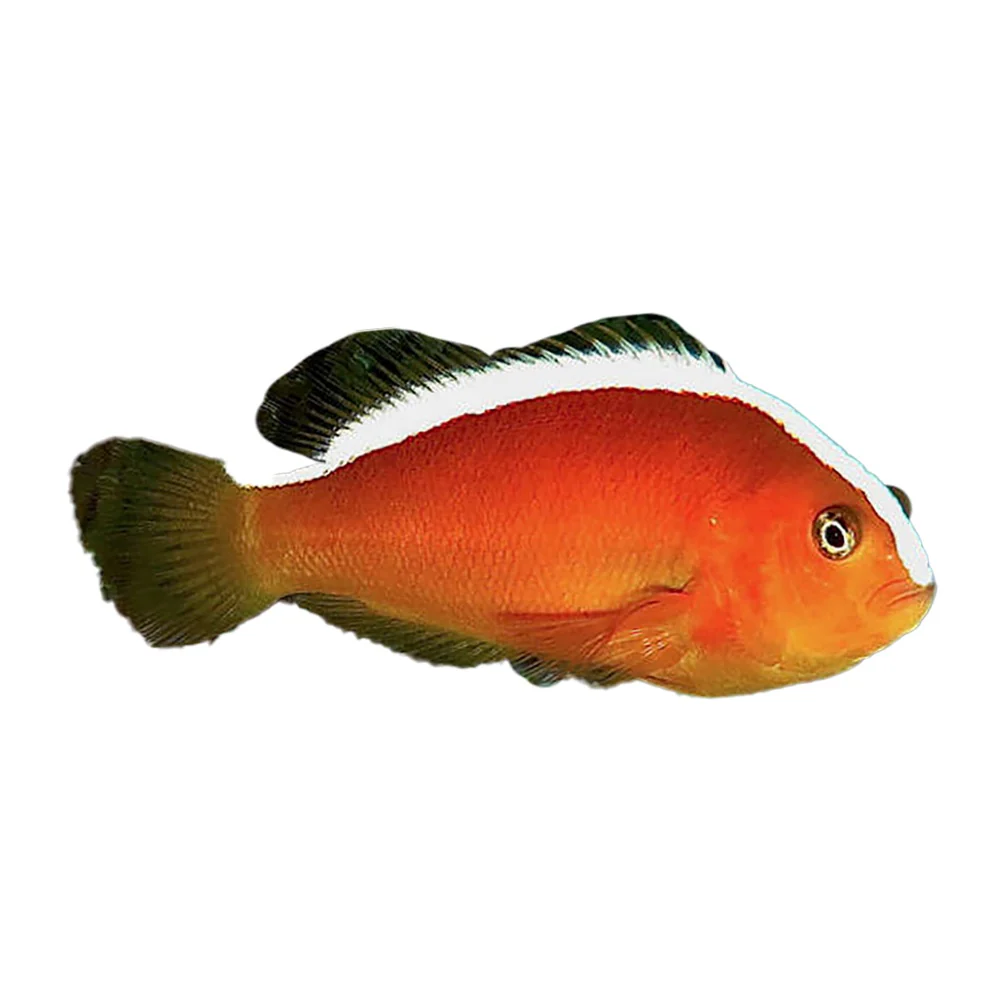
The Body: A uniform, bright orange-to-yellow color across the entire body and fins.
-
The "Skunk Stripe": A single, brilliant white stripe that starts at the snout and runs along the top of the back (the dorsal ridge) all the way to the tail.
-
The Snout: Unlike the A. akallopisos (Pink Skunk), the Orange Skunk’s white stripe begins right at the tip of the nose, which is the easiest way to tell them apart.
-
Eye Detail: Features a clear, bright eye that blends into its golden-orange face.
Behaviour & The "Timid" Host
-
The Symbiosis: In nature, they have a very specific preference for the Merten’s Carpet Anemone (Stichodactyla mertensii) and the Leathery Sea Anemone (Heteractis crispa).
-
Personality: They are much more reclusive than Ocellaris. They tend to stay very close to their host (whether it’s an anemone or a favorite coral) and rarely venture into the open water column.
-
Social Structure: Like all clownfish, they are hermaphroditic. A pair will consist of a larger, dominant female and a smaller male.
-
Reef Safe: 100% Reef Safe. They are arguably the "safest" looking clownfish for a high-end coral display because they look so natural.
Ideal Tank Setup
-
Tank Size: A minimum of 75L (20 Gallons). They are perfect for nano-reefs but also look stunning in large "biotope" systems.
-
Rockwork: Provide plenty of crevices. Because they are shy, they need to know there is a "bolt hole" nearby at all times.
-
Tank Mates: Best kept with peaceful tank mates like Firefish, Blennies, or Royal Grammas. Avoid keeping them with very aggressive fish (like the Orange Line Damsel) that might bully them into hiding permanently.
-
Feeding: Not picky. They will readily accept high-quality flakes, pellets, and frozen mysis.
Why Choose the Orange Skunk Clownfish?
The Orange Skunk is for the "purist" reefer—the hobbyist who wants a fish that looks like it was plucked straight from a National Geographic documentary. It offers a unique silhouette and a bright pop of gold without the "busy" pattern of striped clownfish.
Product Information
Product Information
Shipping & Returns
Shipping & Returns
Orange Skunk Clownfish (Amphiprion Sandaracinos)
Orange Skunk Clownfish (Amphiprion Sandaracinos)
Orange Skunk Clownfish (Amphiprion sandaracinos)
The Orange Skunk Clownfish is a delicate and sophisticated alternative to the common Ocellaris. While it lacks the bold white vertical bands of most clownfish, it is prized for its sleek, "racing stripe" aesthetic. It is generally more timid and peaceful than its cousins, making it an excellent choice for hobbyists who want a more natural, subtle reef look.
Key Information
-
Common Names: Orange Skunk Clownfish, Yellow Skunk Clownfish
-
Scientific Name: Amphiprion sandaracinos
-
Origin: Western Pacific (Indonesia, Philippines, Solomon Islands)
-
Max Size: 10 cm (approx. 4 inches)
-
Lifespan: 10–15 years
-
Temperament: Peaceful to Semi-aggressive (Timid for a Clownfish)
-
Diet: Omnivore – Easy to feed
-
Care Level: Easy
Appearance & Identification
The Orange Skunk is defined by its clean, minimal markings:
-
The Body: A uniform, bright orange-to-yellow color across the entire body and fins.
-
The "Skunk Stripe": A single, brilliant white stripe that starts at the snout and runs along the top of the back (the dorsal ridge) all the way to the tail.
-
The Snout: Unlike the A. akallopisos (Pink Skunk), the Orange Skunk’s white stripe begins right at the tip of the nose, which is the easiest way to tell them apart.
-
Eye Detail: Features a clear, bright eye that blends into its golden-orange face.
Behaviour & The "Timid" Host
-
The Symbiosis: In nature, they have a very specific preference for the Merten’s Carpet Anemone (Stichodactyla mertensii) and the Leathery Sea Anemone (Heteractis crispa).
-
Personality: They are much more reclusive than Ocellaris. They tend to stay very close to their host (whether it’s an anemone or a favorite coral) and rarely venture into the open water column.
-
Social Structure: Like all clownfish, they are hermaphroditic. A pair will consist of a larger, dominant female and a smaller male.
-
Reef Safe: 100% Reef Safe. They are arguably the "safest" looking clownfish for a high-end coral display because they look so natural.
Ideal Tank Setup
-
Tank Size: A minimum of 75L (20 Gallons). They are perfect for nano-reefs but also look stunning in large "biotope" systems.
-
Rockwork: Provide plenty of crevices. Because they are shy, they need to know there is a "bolt hole" nearby at all times.
-
Tank Mates: Best kept with peaceful tank mates like Firefish, Blennies, or Royal Grammas. Avoid keeping them with very aggressive fish (like the Orange Line Damsel) that might bully them into hiding permanently.
-
Feeding: Not picky. They will readily accept high-quality flakes, pellets, and frozen mysis.
Why Choose the Orange Skunk Clownfish?
The Orange Skunk is for the "purist" reefer—the hobbyist who wants a fish that looks like it was plucked straight from a National Geographic documentary. It offers a unique silhouette and a bright pop of gold without the "busy" pattern of striped clownfish.
Original: $39.33
-65%$39.33
$13.77Product Information
Product Information
Shipping & Returns
Shipping & Returns
Description
Orange Skunk Clownfish (Amphiprion sandaracinos)
The Orange Skunk Clownfish is a delicate and sophisticated alternative to the common Ocellaris. While it lacks the bold white vertical bands of most clownfish, it is prized for its sleek, "racing stripe" aesthetic. It is generally more timid and peaceful than its cousins, making it an excellent choice for hobbyists who want a more natural, subtle reef look.
Key Information
-
Common Names: Orange Skunk Clownfish, Yellow Skunk Clownfish
-
Scientific Name: Amphiprion sandaracinos
-
Origin: Western Pacific (Indonesia, Philippines, Solomon Islands)
-
Max Size: 10 cm (approx. 4 inches)
-
Lifespan: 10–15 years
-
Temperament: Peaceful to Semi-aggressive (Timid for a Clownfish)
-
Diet: Omnivore – Easy to feed
-
Care Level: Easy
Appearance & Identification
The Orange Skunk is defined by its clean, minimal markings:
-
The Body: A uniform, bright orange-to-yellow color across the entire body and fins.
-
The "Skunk Stripe": A single, brilliant white stripe that starts at the snout and runs along the top of the back (the dorsal ridge) all the way to the tail.
-
The Snout: Unlike the A. akallopisos (Pink Skunk), the Orange Skunk’s white stripe begins right at the tip of the nose, which is the easiest way to tell them apart.
-
Eye Detail: Features a clear, bright eye that blends into its golden-orange face.
Behaviour & The "Timid" Host
-
The Symbiosis: In nature, they have a very specific preference for the Merten’s Carpet Anemone (Stichodactyla mertensii) and the Leathery Sea Anemone (Heteractis crispa).
-
Personality: They are much more reclusive than Ocellaris. They tend to stay very close to their host (whether it’s an anemone or a favorite coral) and rarely venture into the open water column.
-
Social Structure: Like all clownfish, they are hermaphroditic. A pair will consist of a larger, dominant female and a smaller male.
-
Reef Safe: 100% Reef Safe. They are arguably the "safest" looking clownfish for a high-end coral display because they look so natural.
Ideal Tank Setup
-
Tank Size: A minimum of 75L (20 Gallons). They are perfect for nano-reefs but also look stunning in large "biotope" systems.
-
Rockwork: Provide plenty of crevices. Because they are shy, they need to know there is a "bolt hole" nearby at all times.
-
Tank Mates: Best kept with peaceful tank mates like Firefish, Blennies, or Royal Grammas. Avoid keeping them with very aggressive fish (like the Orange Line Damsel) that might bully them into hiding permanently.
-
Feeding: Not picky. They will readily accept high-quality flakes, pellets, and frozen mysis.
Why Choose the Orange Skunk Clownfish?
The Orange Skunk is for the "purist" reefer—the hobbyist who wants a fish that looks like it was plucked straight from a National Geographic documentary. It offers a unique silhouette and a bright pop of gold without the "busy" pattern of striped clownfish.