Pink Skunk Clownfish Pair (Amphiprion Perideraion)
Pink Skunk Clownfish (Amphiprion perideraion)
The Pink Skunk Clownfish is the soft-toned, "pastel" cousin of the Orange Skunk you looked at previously. It is widely considered the most peaceful and social member of the entire Amphiprion genus. If you are looking for a clownfish that offers a more natural, wild-reef aesthetic without the "feisty" attitude of a Maroon or even a standard Ocellaris, this is the perfect candidate.
Key Information
-
Common Names: Pink Skunk Clownfish, Pink Anemonefish
-
Scientific Name: Amphiprion perideraion
-
Origin: Western Pacific (Cocos-Keeling Islands to Samoa, north to Japan)
-
Max Size: 10 cm (approx. 4 inches)
-
Lifespan: 10–15 years
-
Temperament: Very Peaceful; the most "laid back" clownfish
-
Diet: Omnivore – Easy to feed
-
Care Level: Easy
Appearance & Identification
The Pink Skunk is easily distinguished by its "blushing" color palette:
-
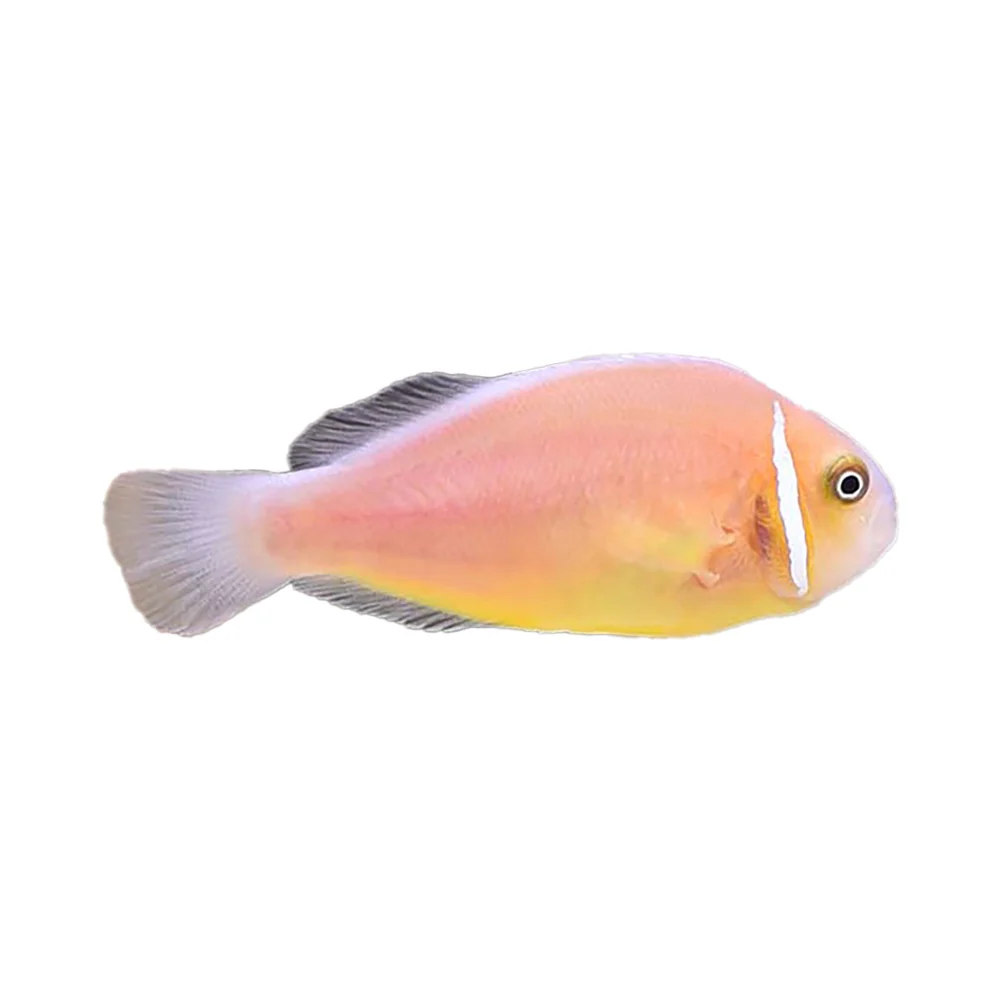
The Body: A soft, peachy-pink to pale orange color that is much lighter and more delicate than the "golden" Orange Skunk.
-
The "Skunk Stripe": A thin, white stripe runs along the dorsal ridge from the snout to the tail.
-
The "Head Bar": This is the key identifier. Unlike the Orange Skunk, the Pink Skunk has a thin, vertical white bar just behind the eye (on the operculum).
-
Fins: The fins are often semi-transparent or a pale cream color, adding to its ethereal look.
Behaviour: The "Socialite" of the Reef
-
The Symbiosis: In the wild, they are almost always found living in the Magnificent Sea Anemone (Heteractis magnifica). They are highly dependent on their host and rarely stray more than a few inches away from it.
-
Peaceful Nature: They are far less aggressive toward other tank mates and can even be kept in small groups (colonies) in very large tanks with multiple anemones—a rarity for clownfish.
-
Reef Safe: 100% Reef Safe. They are gentle with corals and actually provide great movement in a reef tank without being a distraction.
-
Shyness: When first introduced, they can be a bit more timid than other clowns. Having a "host" (whether an anemone or a soft coral like a Toadstool) will help them feel secure much faster.
Ideal Tank Setup
-
Tank Size: A minimum of 75L (20 Gallons) for a pair.
-
Rockwork: Provide plenty of "perching" spots near the areas where you hope they will host.
-
Tank Mates: Because they are so peaceful, avoid keeping them with aggressive "bullies" like the Orange Line Damsel. They pair beautifully with Firefish, Pajama Cardinals, and peaceful Wrasses.
-
Feeding: Not picky. They love frozen mysis, enriched brine shrimp, and high-quality pellets. They also graze on small amounts of algae.
Product Information
Product Information
Shipping & Returns
Shipping & Returns
Pink Skunk Clownfish Pair (Amphiprion Perideraion)
Pink Skunk Clownfish Pair (Amphiprion Perideraion)
Pink Skunk Clownfish (Amphiprion perideraion)
The Pink Skunk Clownfish is the soft-toned, "pastel" cousin of the Orange Skunk you looked at previously. It is widely considered the most peaceful and social member of the entire Amphiprion genus. If you are looking for a clownfish that offers a more natural, wild-reef aesthetic without the "feisty" attitude of a Maroon or even a standard Ocellaris, this is the perfect candidate.
Key Information
-
Common Names: Pink Skunk Clownfish, Pink Anemonefish
-
Scientific Name: Amphiprion perideraion
-
Origin: Western Pacific (Cocos-Keeling Islands to Samoa, north to Japan)
-
Max Size: 10 cm (approx. 4 inches)
-
Lifespan: 10–15 years
-
Temperament: Very Peaceful; the most "laid back" clownfish
-
Diet: Omnivore – Easy to feed
-
Care Level: Easy
Appearance & Identification
The Pink Skunk is easily distinguished by its "blushing" color palette:
-
The Body: A soft, peachy-pink to pale orange color that is much lighter and more delicate than the "golden" Orange Skunk.
-
The "Skunk Stripe": A thin, white stripe runs along the dorsal ridge from the snout to the tail.
-
The "Head Bar": This is the key identifier. Unlike the Orange Skunk, the Pink Skunk has a thin, vertical white bar just behind the eye (on the operculum).
-
Fins: The fins are often semi-transparent or a pale cream color, adding to its ethereal look.
Behaviour: The "Socialite" of the Reef
-
The Symbiosis: In the wild, they are almost always found living in the Magnificent Sea Anemone (Heteractis magnifica). They are highly dependent on their host and rarely stray more than a few inches away from it.
-
Peaceful Nature: They are far less aggressive toward other tank mates and can even be kept in small groups (colonies) in very large tanks with multiple anemones—a rarity for clownfish.
-
Reef Safe: 100% Reef Safe. They are gentle with corals and actually provide great movement in a reef tank without being a distraction.
-
Shyness: When first introduced, they can be a bit more timid than other clowns. Having a "host" (whether an anemone or a soft coral like a Toadstool) will help them feel secure much faster.
Ideal Tank Setup
-
Tank Size: A minimum of 75L (20 Gallons) for a pair.
-
Rockwork: Provide plenty of "perching" spots near the areas where you hope they will host.
-
Tank Mates: Because they are so peaceful, avoid keeping them with aggressive "bullies" like the Orange Line Damsel. They pair beautifully with Firefish, Pajama Cardinals, and peaceful Wrasses.
-
Feeding: Not picky. They love frozen mysis, enriched brine shrimp, and high-quality pellets. They also graze on small amounts of algae.
Original: $92.97
-65%$92.97
$32.54Product Information
Product Information
Shipping & Returns
Shipping & Returns
Description
Pink Skunk Clownfish (Amphiprion perideraion)
The Pink Skunk Clownfish is the soft-toned, "pastel" cousin of the Orange Skunk you looked at previously. It is widely considered the most peaceful and social member of the entire Amphiprion genus. If you are looking for a clownfish that offers a more natural, wild-reef aesthetic without the "feisty" attitude of a Maroon or even a standard Ocellaris, this is the perfect candidate.
Key Information
-
Common Names: Pink Skunk Clownfish, Pink Anemonefish
-
Scientific Name: Amphiprion perideraion
-
Origin: Western Pacific (Cocos-Keeling Islands to Samoa, north to Japan)
-
Max Size: 10 cm (approx. 4 inches)
-
Lifespan: 10–15 years
-
Temperament: Very Peaceful; the most "laid back" clownfish
-
Diet: Omnivore – Easy to feed
-
Care Level: Easy
Appearance & Identification
The Pink Skunk is easily distinguished by its "blushing" color palette:
-
The Body: A soft, peachy-pink to pale orange color that is much lighter and more delicate than the "golden" Orange Skunk.
-
The "Skunk Stripe": A thin, white stripe runs along the dorsal ridge from the snout to the tail.
-
The "Head Bar": This is the key identifier. Unlike the Orange Skunk, the Pink Skunk has a thin, vertical white bar just behind the eye (on the operculum).
-
Fins: The fins are often semi-transparent or a pale cream color, adding to its ethereal look.
Behaviour: The "Socialite" of the Reef
-
The Symbiosis: In the wild, they are almost always found living in the Magnificent Sea Anemone (Heteractis magnifica). They are highly dependent on their host and rarely stray more than a few inches away from it.
-
Peaceful Nature: They are far less aggressive toward other tank mates and can even be kept in small groups (colonies) in very large tanks with multiple anemones—a rarity for clownfish.
-
Reef Safe: 100% Reef Safe. They are gentle with corals and actually provide great movement in a reef tank without being a distraction.
-
Shyness: When first introduced, they can be a bit more timid than other clowns. Having a "host" (whether an anemone or a soft coral like a Toadstool) will help them feel secure much faster.
Ideal Tank Setup
-
Tank Size: A minimum of 75L (20 Gallons) for a pair.
-
Rockwork: Provide plenty of "perching" spots near the areas where you hope they will host.
-
Tank Mates: Because they are so peaceful, avoid keeping them with aggressive "bullies" like the Orange Line Damsel. They pair beautifully with Firefish, Pajama Cardinals, and peaceful Wrasses.
-
Feeding: Not picky. They love frozen mysis, enriched brine shrimp, and high-quality pellets. They also graze on small amounts of algae.