Shark Red Tail (Epalzeorhynchos Bicolor)
Shark Red Tail (Epalzeorhynchos Bicolor)
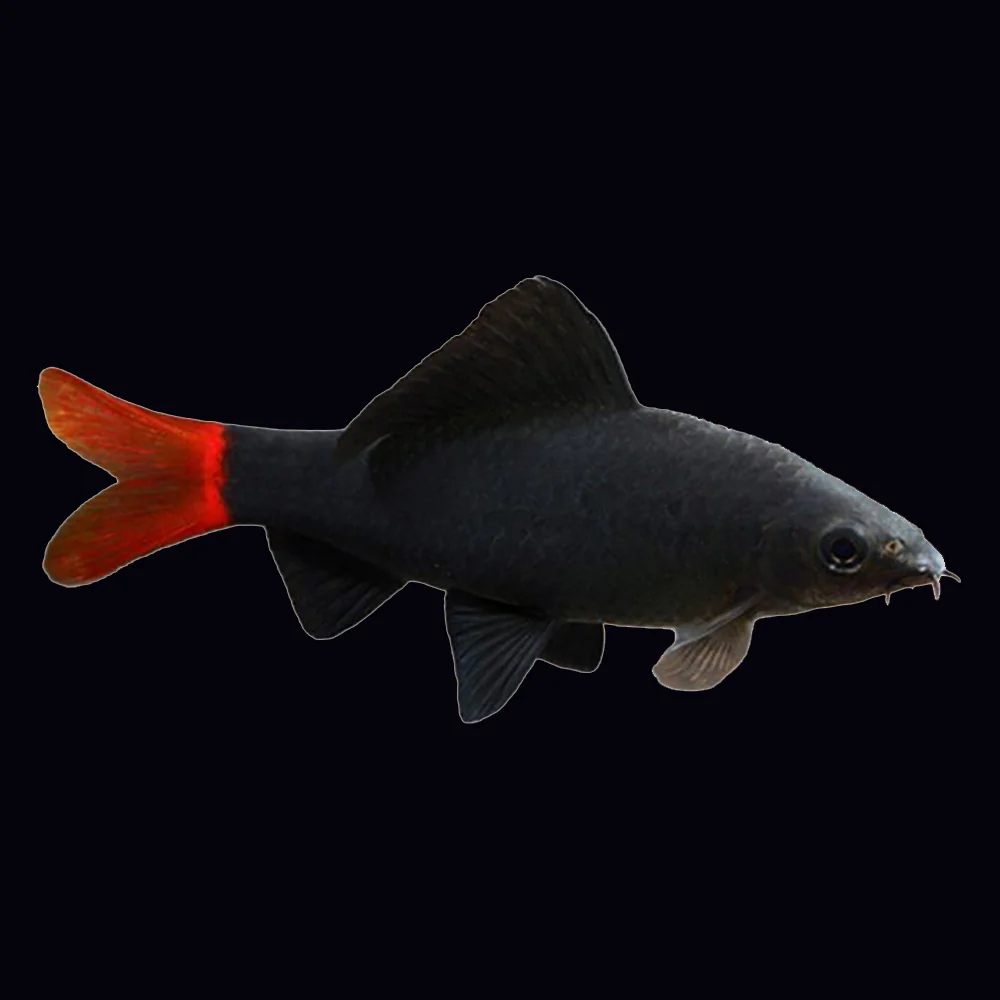
The Red Tail Shark (scientifically Epalzeorhynchos bicolor) is perhaps the most visually striking "shark" in the freshwater hobby. Its velvet-black body and brilliant, blood-red tail create a high-contrast look that is instantly recognizable.
For your e-commerce projects, Iwan, this is a "Premium Oddball" species. Because they are currently listed as Critically Endangered in the wild (mostly existing through captive breeding for the hobby), they carry a significant "story" that can be used for educational or conservation-focused marketing on your Shopify site.
Red Tail Shark (Epalzeorhynchos bicolor)
The Red Tail Shark is an elegant, territorial, and highly active bottom-dweller native to the Chao Phraya basin in Thailand. It is famous for its jet-black, streamlined body and its contrasting fiery red caudal fin. While they are often sold as small juveniles, they grow into powerful, dominant fish that require a well-structured environment. They are "patrol" fish—constantly moving, exploring crevices, and keeping their chosen territory clear of intruders.
Key Information
-
Common Name: Red Tail Shark, Red Tail Black Shark, RTBS
-
Scientific Name: Epalzeorhynchos bicolor
-
Origin: Thailand (Me Klong, Chao Phraya basins)
-
Max Size: 15 cm
-
Lifespan: 10–15 years
-
Temperament: Semi-aggressive (Highly territorial with similar shapes)
-
Diet: Omnivore – Algae wafers, sinking pellets, and frozen foods like bloodworms. They are also useful for grazing on some types of nuisance algae.
-
Care Level: Moderate
Water Parameters
| Parameter | Value |
| Temperature: | 22–26°C |
| pH: | 6.5–7.5 |
| Hardness: | 5–15 dGH |
| Minimum Tank Size: | 115L+ (30 Gallons) for a juvenile; 200L+ for an adult |
Behaviour & Tank Compatibility
The Red Tail Shark is a solitary species. You must keep only one per tank. They are notoriously aggressive toward their own kind and other "shark-shaped" fish like the Rainbow Shark.
They generally ignore fish that swim in the upper layers. Ideal tank mates include robust schooling fish like Harlequin Rasboras, Barbs, Angelfish, and larger Tetras. Avoid keeping them with shy bottom-dwellers (like small Corydoras or Kuhli Loaches) as the shark may harass them away from feeding areas.
Ideal Tank Setup
-
Territory & Caves: Essential. They need a "home base"—a cave, a hollow log, or a dense thicket of plants—where they can retreat. If they feel secure in their home, their aggression toward others usually decreases.
-
Visual Barriers: Use large pieces of driftwood, rocks, and tall plants to break the "line of sight" across the tank. If the shark can't see its tank mates constantly, it is less likely to chase them.
-
Fine Substrate: Sand or smooth gravel is preferred to protect their delicate mouthparts while they scavenge.
-
Tight-Fitting Lid: They are powerful, muscular swimmers and can easily jump out of the tank if startled.
-
High Water Quality: They are sensitive to organic waste buildup. Good filtration and regular water changes are necessary to keep their black color deep and velvet-like.
Why Choose the Red Tail Shark?
The Red Tail Shark is for the hobbyist who wants a "guardian" for their tank. Their bold colors and shark-like silhouette make them a stunning focal point. While they require careful planning regarding tank mates, their longevity and interactive personality make them one of the most iconic and rewarding species in the tropical aquarium world.
Product Information
Product Information
Shipping & Returns
Shipping & Returns
Shark Red Tail (Epalzeorhynchos Bicolor)
Shark Red Tail (Epalzeorhynchos Bicolor)
Shark Red Tail (Epalzeorhynchos Bicolor)
The Red Tail Shark (scientifically Epalzeorhynchos bicolor) is perhaps the most visually striking "shark" in the freshwater hobby. Its velvet-black body and brilliant, blood-red tail create a high-contrast look that is instantly recognizable.
For your e-commerce projects, Iwan, this is a "Premium Oddball" species. Because they are currently listed as Critically Endangered in the wild (mostly existing through captive breeding for the hobby), they carry a significant "story" that can be used for educational or conservation-focused marketing on your Shopify site.
Red Tail Shark (Epalzeorhynchos bicolor)
The Red Tail Shark is an elegant, territorial, and highly active bottom-dweller native to the Chao Phraya basin in Thailand. It is famous for its jet-black, streamlined body and its contrasting fiery red caudal fin. While they are often sold as small juveniles, they grow into powerful, dominant fish that require a well-structured environment. They are "patrol" fish—constantly moving, exploring crevices, and keeping their chosen territory clear of intruders.
Key Information
-
Common Name: Red Tail Shark, Red Tail Black Shark, RTBS
-
Scientific Name: Epalzeorhynchos bicolor
-
Origin: Thailand (Me Klong, Chao Phraya basins)
-
Max Size: 15 cm
-
Lifespan: 10–15 years
-
Temperament: Semi-aggressive (Highly territorial with similar shapes)
-
Diet: Omnivore – Algae wafers, sinking pellets, and frozen foods like bloodworms. They are also useful for grazing on some types of nuisance algae.
-
Care Level: Moderate
Water Parameters
| Parameter | Value |
| Temperature: | 22–26°C |
| pH: | 6.5–7.5 |
| Hardness: | 5–15 dGH |
| Minimum Tank Size: | 115L+ (30 Gallons) for a juvenile; 200L+ for an adult |
Behaviour & Tank Compatibility
The Red Tail Shark is a solitary species. You must keep only one per tank. They are notoriously aggressive toward their own kind and other "shark-shaped" fish like the Rainbow Shark.
They generally ignore fish that swim in the upper layers. Ideal tank mates include robust schooling fish like Harlequin Rasboras, Barbs, Angelfish, and larger Tetras. Avoid keeping them with shy bottom-dwellers (like small Corydoras or Kuhli Loaches) as the shark may harass them away from feeding areas.
Ideal Tank Setup
-
Territory & Caves: Essential. They need a "home base"—a cave, a hollow log, or a dense thicket of plants—where they can retreat. If they feel secure in their home, their aggression toward others usually decreases.
-
Visual Barriers: Use large pieces of driftwood, rocks, and tall plants to break the "line of sight" across the tank. If the shark can't see its tank mates constantly, it is less likely to chase them.
-
Fine Substrate: Sand or smooth gravel is preferred to protect their delicate mouthparts while they scavenge.
-
Tight-Fitting Lid: They are powerful, muscular swimmers and can easily jump out of the tank if startled.
-
High Water Quality: They are sensitive to organic waste buildup. Good filtration and regular water changes are necessary to keep their black color deep and velvet-like.
Why Choose the Red Tail Shark?
The Red Tail Shark is for the hobbyist who wants a "guardian" for their tank. Their bold colors and shark-like silhouette make them a stunning focal point. While they require careful planning regarding tank mates, their longevity and interactive personality make them one of the most iconic and rewarding species in the tropical aquarium world.
Product Information
Product Information
Shipping & Returns
Shipping & Returns
Description
Shark Red Tail (Epalzeorhynchos Bicolor)
The Red Tail Shark (scientifically Epalzeorhynchos bicolor) is perhaps the most visually striking "shark" in the freshwater hobby. Its velvet-black body and brilliant, blood-red tail create a high-contrast look that is instantly recognizable.
For your e-commerce projects, Iwan, this is a "Premium Oddball" species. Because they are currently listed as Critically Endangered in the wild (mostly existing through captive breeding for the hobby), they carry a significant "story" that can be used for educational or conservation-focused marketing on your Shopify site.
Red Tail Shark (Epalzeorhynchos bicolor)
The Red Tail Shark is an elegant, territorial, and highly active bottom-dweller native to the Chao Phraya basin in Thailand. It is famous for its jet-black, streamlined body and its contrasting fiery red caudal fin. While they are often sold as small juveniles, they grow into powerful, dominant fish that require a well-structured environment. They are "patrol" fish—constantly moving, exploring crevices, and keeping their chosen territory clear of intruders.
Key Information
-
Common Name: Red Tail Shark, Red Tail Black Shark, RTBS
-
Scientific Name: Epalzeorhynchos bicolor
-
Origin: Thailand (Me Klong, Chao Phraya basins)
-
Max Size: 15 cm
-
Lifespan: 10–15 years
-
Temperament: Semi-aggressive (Highly territorial with similar shapes)
-
Diet: Omnivore – Algae wafers, sinking pellets, and frozen foods like bloodworms. They are also useful for grazing on some types of nuisance algae.
-
Care Level: Moderate
Water Parameters
| Parameter | Value |
| Temperature: | 22–26°C |
| pH: | 6.5–7.5 |
| Hardness: | 5–15 dGH |
| Minimum Tank Size: | 115L+ (30 Gallons) for a juvenile; 200L+ for an adult |
Behaviour & Tank Compatibility
The Red Tail Shark is a solitary species. You must keep only one per tank. They are notoriously aggressive toward their own kind and other "shark-shaped" fish like the Rainbow Shark.
They generally ignore fish that swim in the upper layers. Ideal tank mates include robust schooling fish like Harlequin Rasboras, Barbs, Angelfish, and larger Tetras. Avoid keeping them with shy bottom-dwellers (like small Corydoras or Kuhli Loaches) as the shark may harass them away from feeding areas.
Ideal Tank Setup
-
Territory & Caves: Essential. They need a "home base"—a cave, a hollow log, or a dense thicket of plants—where they can retreat. If they feel secure in their home, their aggression toward others usually decreases.
-
Visual Barriers: Use large pieces of driftwood, rocks, and tall plants to break the "line of sight" across the tank. If the shark can't see its tank mates constantly, it is less likely to chase them.
-
Fine Substrate: Sand or smooth gravel is preferred to protect their delicate mouthparts while they scavenge.
-
Tight-Fitting Lid: They are powerful, muscular swimmers and can easily jump out of the tank if startled.
-
High Water Quality: They are sensitive to organic waste buildup. Good filtration and regular water changes are necessary to keep their black color deep and velvet-like.
Why Choose the Red Tail Shark?
The Red Tail Shark is for the hobbyist who wants a "guardian" for their tank. Their bold colors and shark-like silhouette make them a stunning focal point. While they require careful planning regarding tank mates, their longevity and interactive personality make them one of the most iconic and rewarding species in the tropical aquarium world.