Three Spot Domino Damselfish (Dascyllus trimaculatus)
Three-Spot Domino Damselfish (Dascyllus trimaculatus)
The Three-Spot Domino Damselfish, commonly known simply as the Domino Damsel, is one of the most famous (and infamously bold) fish in the marine hobby. Widely distributed across the Indo-Pacific—including the reef flats of Indonesia—it is named for its stark black-and-white pattern that resembles a domino tile. While they are cute and "wiggly" as juveniles, they grow into one of the most aggressive and territorial members of the damselfish family.
Key Information
-
Common Names: Domino Damselfish, Three-Spot Damsel, Threespot Dascyllus
-
Scientific Name: Dascyllus trimaculatus
-
Origin: Indo-Pacific (Red Sea to the Line Islands, abundant in Indonesia)
-
Max Size: 12–14 cm (approx. 5 inches) — Large and stocky for a damsel
-
Lifespan: 10–15 years
-
Temperament: Aggressive; highly territorial
-
Diet: Omnivore – Very easy to feed
-
Care Level: Very Easy (Bulletproof)
Appearance & Identification
The Domino undergoes a subtle but important color shift as it matures:
-
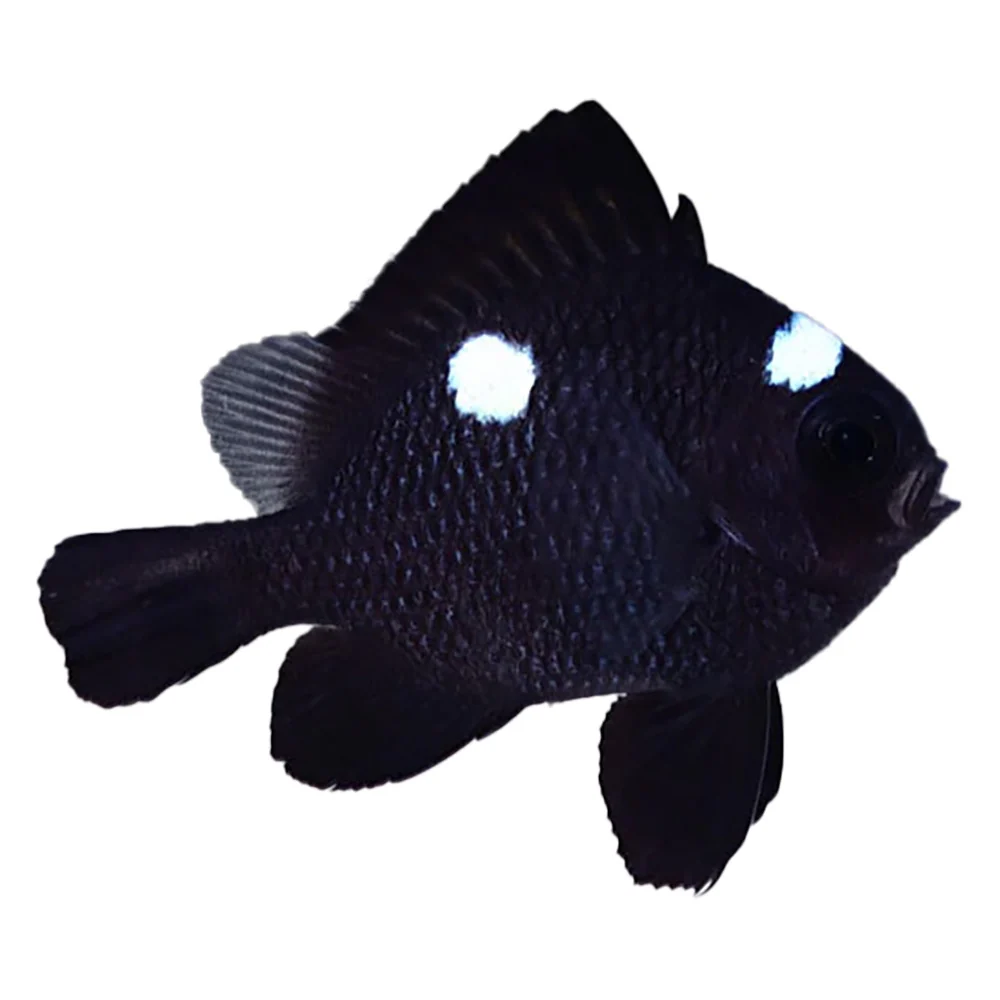
The Juvenile: A jet-black, velvety body with three bright white spots: one on the forehead and one on each side above the midsection. They are famous for their energetic "bouncing" swimming style.
-
The Adult: As they grow, the black often fades to a charcoal or smoky grey, and the white spots may shrink or become less distinct. Their body becomes much deeper and more "plate-like."
-
The Fins: The fins are large and rounded, matching the body color.
Behaviour & Tank Compatibility
-
The Anemone Lover: Interestingly, juvenile Dominoes often live among the tentacles of Sea Anemones (like the Carpet or Bubble Tip) alongside Clownfish. However, as they grow, they move into the rockwork.
-
Aggression: This fish is a "tank boss." Once it establishes a territory, it will attack almost anything that enters its space, including human hands during maintenance.
-
Reef Safe: 100% Reef Safe with corals, though their aggressive behavior can stress out other fish living in the reef.
-
Social Structure: Best kept singly unless the tank is very large. In a small tank, they will harass other damsels or even their own kind.
-
Tank Mates: Only keep with similarly "tough" fish like Tangs, large Wrasses, Dottybacks, or Puffers. Avoid keeping them with peaceful species like Firefish, Cardinalfish, or small Gobies.
Ideal Tank Setup
-
Tank Size: A minimum of 115L (30 Gallons) for a single specimen.
-
Rockwork: Provide plenty of caves and vertical structures. They like to have a "home base" they can dart back into.
-
Hardiness: These are among the hardiest fish in the world. They are often used to help cycle tanks (though this is no longer recommended) because they can survive almost any water condition.
-
Lid: They are active and fast; a lid is recommended to prevent accidental jumping.
Dietary Needs
They are opportunistic feeders and will eat almost anything offered:
-
Diet: Eagerly accept flakes, pellets, frozen mysis, and brine shrimp.
-
Frequency: Feed 1–2 times daily. They are very fast and will often beat other fish to the food.
Why Choose the Domino Damselfish?
The Domino Damsel is for the hobbyist who wants a fish with massive personality and durability. If you have a predator tank or a "rough-and-tumble" community tank with large inhabitants, the Domino provides constant movement and a striking monochrome look. Its unique relationship with anemones as a juvenile also makes it a fascinating species to observe in a reef setting.
Product Information
Product Information
Shipping & Returns
Shipping & Returns
Three Spot Domino Damselfish (Dascyllus trimaculatus)
Three Spot Domino Damselfish (Dascyllus trimaculatus)
Three-Spot Domino Damselfish (Dascyllus trimaculatus)
The Three-Spot Domino Damselfish, commonly known simply as the Domino Damsel, is one of the most famous (and infamously bold) fish in the marine hobby. Widely distributed across the Indo-Pacific—including the reef flats of Indonesia—it is named for its stark black-and-white pattern that resembles a domino tile. While they are cute and "wiggly" as juveniles, they grow into one of the most aggressive and territorial members of the damselfish family.
Key Information
-
Common Names: Domino Damselfish, Three-Spot Damsel, Threespot Dascyllus
-
Scientific Name: Dascyllus trimaculatus
-
Origin: Indo-Pacific (Red Sea to the Line Islands, abundant in Indonesia)
-
Max Size: 12–14 cm (approx. 5 inches) — Large and stocky for a damsel
-
Lifespan: 10–15 years
-
Temperament: Aggressive; highly territorial
-
Diet: Omnivore – Very easy to feed
-
Care Level: Very Easy (Bulletproof)
Appearance & Identification
The Domino undergoes a subtle but important color shift as it matures:
-
The Juvenile: A jet-black, velvety body with three bright white spots: one on the forehead and one on each side above the midsection. They are famous for their energetic "bouncing" swimming style.
-
The Adult: As they grow, the black often fades to a charcoal or smoky grey, and the white spots may shrink or become less distinct. Their body becomes much deeper and more "plate-like."
-
The Fins: The fins are large and rounded, matching the body color.
Behaviour & Tank Compatibility
-
The Anemone Lover: Interestingly, juvenile Dominoes often live among the tentacles of Sea Anemones (like the Carpet or Bubble Tip) alongside Clownfish. However, as they grow, they move into the rockwork.
-
Aggression: This fish is a "tank boss." Once it establishes a territory, it will attack almost anything that enters its space, including human hands during maintenance.
-
Reef Safe: 100% Reef Safe with corals, though their aggressive behavior can stress out other fish living in the reef.
-
Social Structure: Best kept singly unless the tank is very large. In a small tank, they will harass other damsels or even their own kind.
-
Tank Mates: Only keep with similarly "tough" fish like Tangs, large Wrasses, Dottybacks, or Puffers. Avoid keeping them with peaceful species like Firefish, Cardinalfish, or small Gobies.
Ideal Tank Setup
-
Tank Size: A minimum of 115L (30 Gallons) for a single specimen.
-
Rockwork: Provide plenty of caves and vertical structures. They like to have a "home base" they can dart back into.
-
Hardiness: These are among the hardiest fish in the world. They are often used to help cycle tanks (though this is no longer recommended) because they can survive almost any water condition.
-
Lid: They are active and fast; a lid is recommended to prevent accidental jumping.
Dietary Needs
They are opportunistic feeders and will eat almost anything offered:
-
Diet: Eagerly accept flakes, pellets, frozen mysis, and brine shrimp.
-
Frequency: Feed 1–2 times daily. They are very fast and will often beat other fish to the food.
Why Choose the Domino Damselfish?
The Domino Damsel is for the hobbyist who wants a fish with massive personality and durability. If you have a predator tank or a "rough-and-tumble" community tank with large inhabitants, the Domino provides constant movement and a striking monochrome look. Its unique relationship with anemones as a juvenile also makes it a fascinating species to observe in a reef setting.
Original: $12.87
-65%$12.87
$4.50Product Information
Product Information
Shipping & Returns
Shipping & Returns
Description
Three-Spot Domino Damselfish (Dascyllus trimaculatus)
The Three-Spot Domino Damselfish, commonly known simply as the Domino Damsel, is one of the most famous (and infamously bold) fish in the marine hobby. Widely distributed across the Indo-Pacific—including the reef flats of Indonesia—it is named for its stark black-and-white pattern that resembles a domino tile. While they are cute and "wiggly" as juveniles, they grow into one of the most aggressive and territorial members of the damselfish family.
Key Information
-
Common Names: Domino Damselfish, Three-Spot Damsel, Threespot Dascyllus
-
Scientific Name: Dascyllus trimaculatus
-
Origin: Indo-Pacific (Red Sea to the Line Islands, abundant in Indonesia)
-
Max Size: 12–14 cm (approx. 5 inches) — Large and stocky for a damsel
-
Lifespan: 10–15 years
-
Temperament: Aggressive; highly territorial
-
Diet: Omnivore – Very easy to feed
-
Care Level: Very Easy (Bulletproof)
Appearance & Identification
The Domino undergoes a subtle but important color shift as it matures:
-
The Juvenile: A jet-black, velvety body with three bright white spots: one on the forehead and one on each side above the midsection. They are famous for their energetic "bouncing" swimming style.
-
The Adult: As they grow, the black often fades to a charcoal or smoky grey, and the white spots may shrink or become less distinct. Their body becomes much deeper and more "plate-like."
-
The Fins: The fins are large and rounded, matching the body color.
Behaviour & Tank Compatibility
-
The Anemone Lover: Interestingly, juvenile Dominoes often live among the tentacles of Sea Anemones (like the Carpet or Bubble Tip) alongside Clownfish. However, as they grow, they move into the rockwork.
-
Aggression: This fish is a "tank boss." Once it establishes a territory, it will attack almost anything that enters its space, including human hands during maintenance.
-
Reef Safe: 100% Reef Safe with corals, though their aggressive behavior can stress out other fish living in the reef.
-
Social Structure: Best kept singly unless the tank is very large. In a small tank, they will harass other damsels or even their own kind.
-
Tank Mates: Only keep with similarly "tough" fish like Tangs, large Wrasses, Dottybacks, or Puffers. Avoid keeping them with peaceful species like Firefish, Cardinalfish, or small Gobies.
Ideal Tank Setup
-
Tank Size: A minimum of 115L (30 Gallons) for a single specimen.
-
Rockwork: Provide plenty of caves and vertical structures. They like to have a "home base" they can dart back into.
-
Hardiness: These are among the hardiest fish in the world. They are often used to help cycle tanks (though this is no longer recommended) because they can survive almost any water condition.
-
Lid: They are active and fast; a lid is recommended to prevent accidental jumping.
Dietary Needs
They are opportunistic feeders and will eat almost anything offered:
-
Diet: Eagerly accept flakes, pellets, frozen mysis, and brine shrimp.
-
Frequency: Feed 1–2 times daily. They are very fast and will often beat other fish to the food.
Why Choose the Domino Damselfish?
The Domino Damsel is for the hobbyist who wants a fish with massive personality and durability. If you have a predator tank or a "rough-and-tumble" community tank with large inhabitants, the Domino provides constant movement and a striking monochrome look. Its unique relationship with anemones as a juvenile also makes it a fascinating species to observe in a reef setting.