True Sebae Clownfish (Amphiprion Sebae)
True Sebae Clownfish (Amphiprion sebae)
The True Sebae Clownfish is often the subject of "identity theft" in the aquarium trade. It is frequently confused with the Clarkii Clownfish or the Saddleback Clownfish, but the "True" Sebae is a distinct, high-contrast species that is prized for its elegant, dark coloration and its specific relationship with certain anemones. It is a hardy, medium-sized clownfish that brings a classic "Indo-Pacific" look to the aquarium.
Key Information
-
Common Names: True Sebae Clown, Sebae Anemonefish
-
Scientific Name: Amphiprion sebae
-
Origin: Northern Indian Ocean (India, Sri Lanka, Maldives)
-
Max Size: 14–16 cm (approx. 6 inches) — One of the larger clownfish species.
-
Lifespan: 10–15 years
-
Temperament: Semi-aggressive (especially when hosting)
-
Diet: Omnivore – Easy to feed
-
Care Level: Easy to Moderate
Appearance & Identification
Telling a "True" Sebae apart from a Clarkii requires a close look:
-
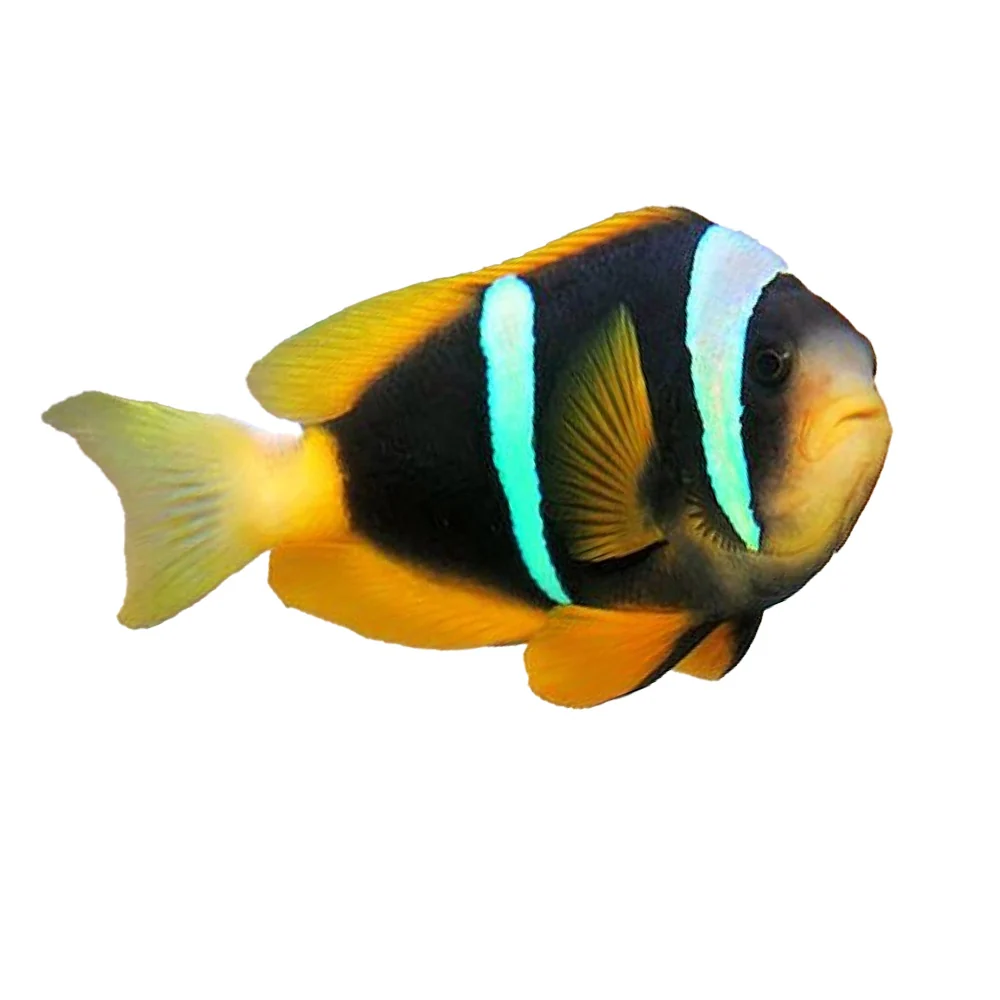
The Body: Typically a deep chocolate brown to jet black.
-
The Stripes: Features two bold white vertical bands. The second band (the mid-body band) is unique—it often extends upward and backward into the rear of the dorsal fin, unlike the Clarkii’s band which usually stops.
-
The Tail: This is the best identifier. A True Sebae has a bright yellow-to-orange tail, whereas Clarkii tails can vary significantly (white, yellow, or black-edged).
-
The Snout: Usually features a yellow-to-orange face/nose area that contrasts sharply with the dark body.
Behaviour: The "Anemone Anchor"
-
The Namesake Host: In the wild, they are most commonly associated with the Sebae Anemone (Heteractis crispa), though they will also host in Saddle Anemones (S. haddoni).
-
Territoriality: Like the Tomato Clown, the Sebae becomes increasingly territorial as it grows. A mature female will protect her anemone with significant vigor, sometimes even "nipping" at the aquarist's hand during cleaning.
-
Swimming Style: They have a heavy, powerful swimming style compared to the "wiggling" Ocellaris. They are confident and spend a good amount of time in open water near their host.
-
Reef Safe: 100% Reef Safe. They are beneficial for the reef, but because they grow large, they can be "clumsy" and may knock over loose coral frags.
Ideal Tank Setup
-
Tank Size: A minimum of 115L–150L (30–40 Gallons). Due to their large adult size, they need more room than the average clownfish.
-
Substrate: They are often found in "sandy" reef interfaces. A fine sand bed is ideal, especially if keeping their preferred "carpet-style" anemones.
-
Feeding: Very easy. They love frozen mysis, chopped seafood, and high-quality pellets. They should be fed 1–2 times daily.
-
Tank Mates: Best kept with other semi-aggressive fish like Tangs, Angelfish, or larger Wrasses. Avoid keeping them with very timid fish in smaller tanks.
Why Choose the True Sebae Clownfish?
The True Sebae is for the hobbyist who wants a "Sleek and Classic" aesthetic. It offers a much darker, moodier look than the bright orange Ocellaris. If you have a large Sebae Anemone, this fish is the "biotope-correct" partner that will make your display look like a snapshot from a Sri Lankan reef.
Product Information
Product Information
Shipping & Returns
Shipping & Returns
True Sebae Clownfish (Amphiprion Sebae)
True Sebae Clownfish (Amphiprion Sebae)
True Sebae Clownfish (Amphiprion sebae)
The True Sebae Clownfish is often the subject of "identity theft" in the aquarium trade. It is frequently confused with the Clarkii Clownfish or the Saddleback Clownfish, but the "True" Sebae is a distinct, high-contrast species that is prized for its elegant, dark coloration and its specific relationship with certain anemones. It is a hardy, medium-sized clownfish that brings a classic "Indo-Pacific" look to the aquarium.
Key Information
-
Common Names: True Sebae Clown, Sebae Anemonefish
-
Scientific Name: Amphiprion sebae
-
Origin: Northern Indian Ocean (India, Sri Lanka, Maldives)
-
Max Size: 14–16 cm (approx. 6 inches) — One of the larger clownfish species.
-
Lifespan: 10–15 years
-
Temperament: Semi-aggressive (especially when hosting)
-
Diet: Omnivore – Easy to feed
-
Care Level: Easy to Moderate
Appearance & Identification
Telling a "True" Sebae apart from a Clarkii requires a close look:
-
The Body: Typically a deep chocolate brown to jet black.
-
The Stripes: Features two bold white vertical bands. The second band (the mid-body band) is unique—it often extends upward and backward into the rear of the dorsal fin, unlike the Clarkii’s band which usually stops.
-
The Tail: This is the best identifier. A True Sebae has a bright yellow-to-orange tail, whereas Clarkii tails can vary significantly (white, yellow, or black-edged).
-
The Snout: Usually features a yellow-to-orange face/nose area that contrasts sharply with the dark body.
Behaviour: The "Anemone Anchor"
-
The Namesake Host: In the wild, they are most commonly associated with the Sebae Anemone (Heteractis crispa), though they will also host in Saddle Anemones (S. haddoni).
-
Territoriality: Like the Tomato Clown, the Sebae becomes increasingly territorial as it grows. A mature female will protect her anemone with significant vigor, sometimes even "nipping" at the aquarist's hand during cleaning.
-
Swimming Style: They have a heavy, powerful swimming style compared to the "wiggling" Ocellaris. They are confident and spend a good amount of time in open water near their host.
-
Reef Safe: 100% Reef Safe. They are beneficial for the reef, but because they grow large, they can be "clumsy" and may knock over loose coral frags.
Ideal Tank Setup
-
Tank Size: A minimum of 115L–150L (30–40 Gallons). Due to their large adult size, they need more room than the average clownfish.
-
Substrate: They are often found in "sandy" reef interfaces. A fine sand bed is ideal, especially if keeping their preferred "carpet-style" anemones.
-
Feeding: Very easy. They love frozen mysis, chopped seafood, and high-quality pellets. They should be fed 1–2 times daily.
-
Tank Mates: Best kept with other semi-aggressive fish like Tangs, Angelfish, or larger Wrasses. Avoid keeping them with very timid fish in smaller tanks.
Why Choose the True Sebae Clownfish?
The True Sebae is for the hobbyist who wants a "Sleek and Classic" aesthetic. It offers a much darker, moodier look than the bright orange Ocellaris. If you have a large Sebae Anemone, this fish is the "biotope-correct" partner that will make your display look like a snapshot from a Sri Lankan reef.
Original: $57.21
-65%$57.21
$20.02Product Information
Product Information
Shipping & Returns
Shipping & Returns
Description
True Sebae Clownfish (Amphiprion sebae)
The True Sebae Clownfish is often the subject of "identity theft" in the aquarium trade. It is frequently confused with the Clarkii Clownfish or the Saddleback Clownfish, but the "True" Sebae is a distinct, high-contrast species that is prized for its elegant, dark coloration and its specific relationship with certain anemones. It is a hardy, medium-sized clownfish that brings a classic "Indo-Pacific" look to the aquarium.
Key Information
-
Common Names: True Sebae Clown, Sebae Anemonefish
-
Scientific Name: Amphiprion sebae
-
Origin: Northern Indian Ocean (India, Sri Lanka, Maldives)
-
Max Size: 14–16 cm (approx. 6 inches) — One of the larger clownfish species.
-
Lifespan: 10–15 years
-
Temperament: Semi-aggressive (especially when hosting)
-
Diet: Omnivore – Easy to feed
-
Care Level: Easy to Moderate
Appearance & Identification
Telling a "True" Sebae apart from a Clarkii requires a close look:
-
The Body: Typically a deep chocolate brown to jet black.
-
The Stripes: Features two bold white vertical bands. The second band (the mid-body band) is unique—it often extends upward and backward into the rear of the dorsal fin, unlike the Clarkii’s band which usually stops.
-
The Tail: This is the best identifier. A True Sebae has a bright yellow-to-orange tail, whereas Clarkii tails can vary significantly (white, yellow, or black-edged).
-
The Snout: Usually features a yellow-to-orange face/nose area that contrasts sharply with the dark body.
Behaviour: The "Anemone Anchor"
-
The Namesake Host: In the wild, they are most commonly associated with the Sebae Anemone (Heteractis crispa), though they will also host in Saddle Anemones (S. haddoni).
-
Territoriality: Like the Tomato Clown, the Sebae becomes increasingly territorial as it grows. A mature female will protect her anemone with significant vigor, sometimes even "nipping" at the aquarist's hand during cleaning.
-
Swimming Style: They have a heavy, powerful swimming style compared to the "wiggling" Ocellaris. They are confident and spend a good amount of time in open water near their host.
-
Reef Safe: 100% Reef Safe. They are beneficial for the reef, but because they grow large, they can be "clumsy" and may knock over loose coral frags.
Ideal Tank Setup
-
Tank Size: A minimum of 115L–150L (30–40 Gallons). Due to their large adult size, they need more room than the average clownfish.
-
Substrate: They are often found in "sandy" reef interfaces. A fine sand bed is ideal, especially if keeping their preferred "carpet-style" anemones.
-
Feeding: Very easy. They love frozen mysis, chopped seafood, and high-quality pellets. They should be fed 1–2 times daily.
-
Tank Mates: Best kept with other semi-aggressive fish like Tangs, Angelfish, or larger Wrasses. Avoid keeping them with very timid fish in smaller tanks.
Why Choose the True Sebae Clownfish?
The True Sebae is for the hobbyist who wants a "Sleek and Classic" aesthetic. It offers a much darker, moodier look than the bright orange Ocellaris. If you have a large Sebae Anemone, this fish is the "biotope-correct" partner that will make your display look like a snapshot from a Sri Lankan reef.